.png)
What Is the E-Waste Reporting System?
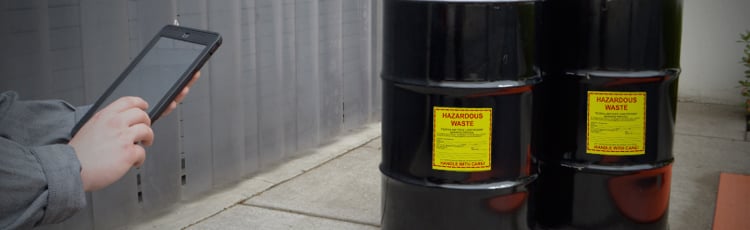
The e-waste reporting system refers to the regulatory framework used to document and track electronic and hazardous waste from generation through disposal. The EPA e-Manifest platform supports shipment documentation for regulated hazardous waste, but reporting accuracy depends on proper on-site labeling and storage. A hazardous waste tracking system functions correctly only when containers are clearly identified, accumulation dates are accurate, and waste streams remain visible during inspections.
This article explains:
- How electronic and universal waste fit into a hazardous waste program
- What must appear on compliant waste labels
- Where labels belong in accumulation areas
- Common labeling mistakes that lead to inspection findings
- How durable labeling strengthens audit readiness
Facilities managing batteries, lamps, and electronic scrap face frequent scrutiny. Mislabeling universal waste remains one of the most common inspection violations.
How E-Waste and Universal Waste Connect to a Hazardous Waste Tracking System
Electronic waste often contains regulated components such as lithium batteries, mercury, or lead. Depending on classification, materials fall under hazardous waste or universal waste requirements. Each category carries specific labeling and accumulation rules.
The EPA e-Manifest system tracks hazardous waste shipments once materials leave a facility. Inspectors evaluate compliance long before that stage. If containers lack required wording or accumulation dates, the hazardous waste tracking system loses reliability.
For example, a maintenance team may collect used fluorescent lamps in a drum labeled “Waste Lamps.” During inspection, the wording does not meet universal waste requirements. If the container also lacks an accumulation start date, the facility may receive a citation tied to improper storage timelines, even if shipment records through EPA e-Manifest remain accurate.
Physical labeling and documentation must align for waste controls to hold up during inspection.
What Must Appear on Universal Waste and E-Waste Labels
Universal waste labeling follows clear regulatory expectations. Wording must match the required language, and containers must include timing information.
Universal waste labels must include:
- The words “Universal Waste-Batteries,” “Universal Waste-Lamps,” or the correct waste type
- An accumulation start date marking when waste collection began
- Clear, legible print that remains visible during storage
Electronic devices classified as hazardous waste require proper hazardous waste identification that supports facility documentation and inspection review.
Shorthand descriptions such as “Used Electronics” or “Battery Box” often create compliance gaps. Standardized templates promote consistency and strengthen internal oversight.
Universal and Hazardous Waste Labeling Reference
| Waste Type | Required Label Wording | Accumulation Date Required | Common Inspection Issue |
|---|---|---|---|
| Used Batteries | “Universal Waste-Batteries” | Yes | Missing date or incorrect wording |
| Fluorescent Lamps | “Universal Waste-Lamps” | Yes | Labels hidden or obstructed |
| Mercury-Containing Equipment | “Universal Waste-Mercury-Containing Equipment” | Yes | Faded or illegible labels |
| Hazardous Electronic Waste | “Hazardous Waste” with waste description | Yes | Container not properly labeled or closed |
This reference highlights how small wording differences often determine whether labeling meets inspection standards.
Generator Status and Documentation Alignment
Generator status affects storage limits, reporting thresholds, and inspection expectations. Large quantity generators, small quantity generators, and very small quantity generators operate under different accumulation requirements. Regardless of category, labeling provides the physical reference point inspectors use to verify compliance.
If container labels do not match internal logs or shipment records, documentation appears unreliable. Inspectors often compare physical waste areas to tracking records to confirm consistency. When labeling remains accurate and durable, facilities demonstrate organized oversight within their hazardous waste tracking system.
Clear identification supports smoother inspections and reduces unnecessary follow-up requests.
Where Labels Should Be Placed in Waste Accumulation Areas
Correct wording alone does not satisfy inspectors. Placement determines whether labeling supports a reliable hazardous waste tracking system.
Labels should be applied to the exterior of closed containers and positioned where inspectors can easily see them during walkthroughs. If waste is stored individually without secondary containment, each item must carry proper identification. Labels should never be hidden behind shrink wrap, placed against walls, or obstructed by stacked materials.
Consider a pallet of used lithium-ion batteries staged for pickup. The team prints a compliant label but places it on the inward-facing side of the pallet. During inspection, the waste appears unlabeled. That visibility issue may trigger findings even though the wording meets requirements.
Clear placement improves traceability and strengthens audit outcomes.
Common Labeling Mistakes That Disrupt Tracking and Reporting
Inspection findings frequently stem from execution gaps rather than policy failures. Facilities may maintain internal procedures while labeling practices vary between departments.
Common compliance misses include:
- Missing accumulation start dates
- Incorrect regulatory wording
- Labels that fade in high-heat or chemical-prone areas
- Containers left open or partially labeled
Environmental exposure often drives these issues. Waste accumulation areas may sit outdoors, inside mechanical rooms, or near chemical handling stations. Standard office labels deteriorate quickly in heat, UV light, dust, and solvent exposure. As text fades or adhesives weaken, traceability declines and documentation becomes harder to verify.
EHS managers preparing for audits benefit from durable, standardized labeling systems that reduce variability and support a defensible hazardous waste tracking system.
Accumulation Time Limits and Labeling Controls
Universal waste regulations typically allow facilities to store materials for up to one year from the accumulation start date. Hazardous waste timelines vary based on generator status, but in every case, labeling establishes the official storage clock.
If a container lacks a visible and accurate start date, inspectors cannot verify compliance with storage limits. Even when facilities maintain digital logs, missing or illegible dates on containers create risk.
Clear, durable date labeling allows teams to monitor aging waste at a glance. Maintenance staff and EHS managers can quickly identify containers approaching regulatory deadlines, strengthening oversight within a hazardous waste tracking system.
Preparing for Inspections and Internal Audits

Waste accumulation areas often receive early attention during inspections. Labeling gives regulators immediate insight into how well a facility manages its waste program.
Inspectors commonly review:
- Required wording that matches waste classification
- Presence and legibility of accumulation start dates
- Container closure and visible identification
When labeling appears inconsistent, inspectors may widen the scope of review. Standardized formats and durable materials demonstrate organized control and improve alignment between physical storage and documentation systems such as EPA e-Manifest.
For EHS managers, consistent labeling remains one of the most controllable elements within a hazardous waste tracking system.
DuraLabel Product and Resource
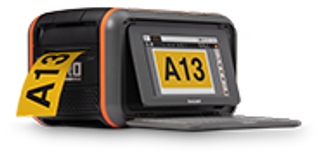
Maintaining an effective hazardous waste tracking system requires labeling equipment built for industrial environments. The DuraLabel® Toro® Max Industrial Sign and Label System allows facilities to print durable universal waste and hazardous waste labels on demand. Its thermal transfer technology produces smudge-resistant, long-lasting labels that perform in heat, dust, and chemical exposure. Teams can quickly update accumulation dates and waste descriptions, helping maintain consistency across departments and supporting inspection readiness.
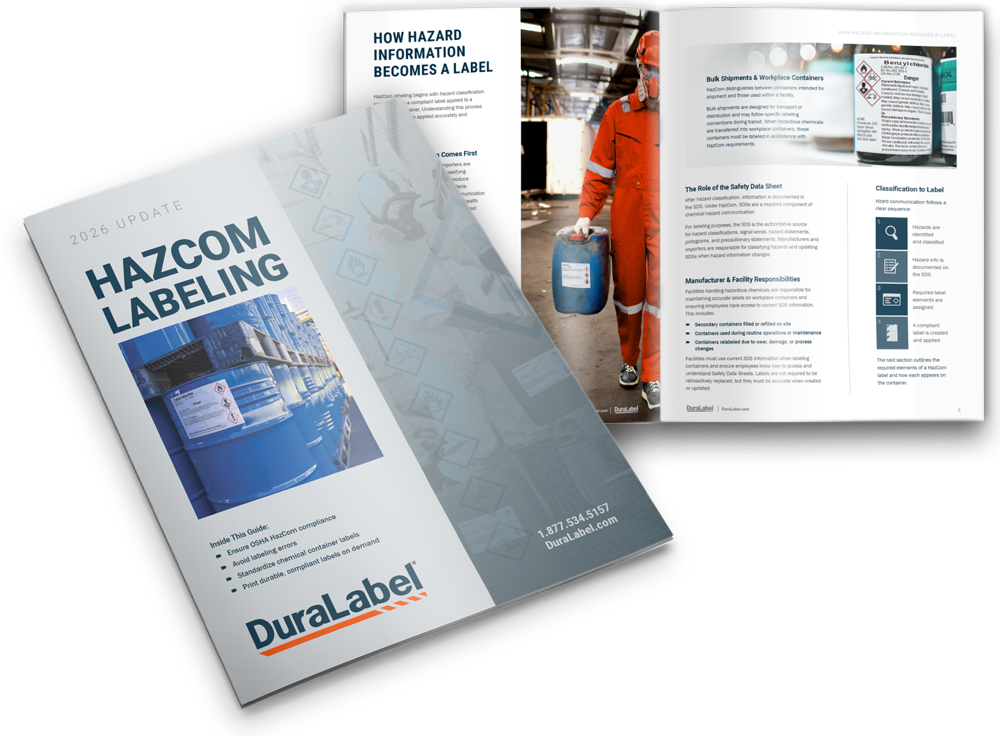
For additional guidance on compliant hazard communication practices, download the free HazCom Labeling Quick Start Guide. This resource outlines labeling fundamentals aligned with OSHA Hazard Communication requirements and helps facilities standardize hazard identification procedures across waste accumulation areas.
Questions about strengthening your waste labeling program? Call 1-888-786-9223 to speak with a DuraLabel expert for personalized assistance.
Read Next:
Breathe Easier with Respiratory Protection Labeling for Safer Jobsites
What is HazCom? Your Guide to Chemical Labeling, GHS, & OSHA Standards

Toxic Waste Management Best Practices for Safer Facilities
What Are the Health Risks Associated with Long Term Toxic Waste Exposure? Long-term toxic waste exposure can ...
Read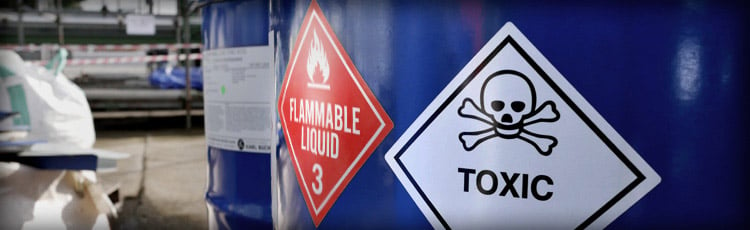
Which Hazardous Waste Symbol Should a Facility Use?
Quick Safety & Compliance Summary EPA 40 CFR Part 262 mandates hazardous waste labelingon accumulation ...
Read
5 Ways to Avert Common Bio Waste Violations
There are clear guidelines that health care and lab workers must follow when handling biohazardous waste. ...
ReadTake Action
Print Your Own Signs
Free Label Design Software
.webp)