10 RULES FOR FORKLIFT SAFETY
Infographic Transcript
1. KNOW THE STATS
Forklift-related citations are consistently among OSHA’s top 10 violations each year:
- 2013: 6th
- 2015: 6th
- 2016: 5th
- 2018: 6th
- 2012: 7th
- 2014: 7th
Forklift-related fatalities (annual) trend:
- 2011: 66
- 2012: 95
- 2013: 91
- 2014: 89
% of forklift incidents:
- Struck by forklift: 22%
- Workers on foot struck by forklift: 20%
- Vehicle overturned incidents: 16%
- Falls from forklifts: 9%
More than 1,000,000 forklifts are in operation throughout the United States.
Roughly 20,000 workers are injured every year in forklift-related accidents.
OSHA estimates there are 110,000 forklift accidents every year.
Forklift accidents cost businesses $135,000,000 every year.
Between October 2013 and September 2014:
- 1,619 federal inspections
- 2,349 forklift-related citations
- $4,286,235 in penalties
Industry — Inspections / Citations / Penalties
- Manufacturing — 758 / 1,706 / $1,640,164
- Transportation & Warehousing — 188 / 292 / $943,417
- Wholesale — 212 / 332 / $568,927
- Construction — 176 / 219 / $326,606
- Retail — 118 / 169 / $350,548
Roughly 70% of all accidents could have been avoided with proper training.
2. KNOW THE CLASSES
[The small explanatory sentence above the class diagrams is not fully legible at the provided resolution.]
Forklift classes shown:
- Electric Motor Rider Trucks
- Electric Motor Hand Trucks or Hand/Rider Trucks
- Electric Motor Narrow Aisle Trucks
- Internal Combustion Engine Trucks (Cushion Tires)
- Internal Combustion Engine Trucks (Pneumatic Tires)
- Electric and Internal Combustion Engine Tractors
- Rough Terrain Forklift Trucks
[Small bullet-point details under each class title are not fully legible at the provided resolution.]
3. KNOW THE COMMON HAZARDS
[Most of the small hazard-description text in this section is not fully legible at the provided resolution.]
4. KNOW THE REQUIREMENTS
[Most of the small requirement text in this section is not fully legible at the provided resolution.]
5. KNOW WHAT TO WATCH FOR
Perform a DAILY INSPECTION of all forklifts to look for:
- TEST brakes, lights, horn, steering, and load … [last word(s) not fully legible]
- EXAMINE tires and … [remainder not fully legible]
- Check for water, oil, or radiator LEAKS
- Ensure forks are STRAIGHT and not CRACKED
- LOOK for obstructions, worn surfaces, overhead obstacles, and other potential hazards
6. STAY SAFE WHILE USING A FORKLIFT
- Drive with the load as low as safely possible.
- Keep all parts of the body (e.g., feet, hands) inside the main body of the vehicle to avoid hazards.
- Use the horn at intersections and in areas where pedestrian traffic is high.
- Pay close attention to posted speed limits and warning signs.
- Ensure both forks engage as far in the load as possible before lifting.
- Never allow riders on a forklift.
7. KEEP AN EYE OUT AROUND YOUR FACILITY
[The short intro line under the heading is not fully legible at the provided resolution.]
Bullets shown:
- Implement a floor marking system in your facility.
- Follow safety signs in the warehouse where pedestrians and machinery intersect.
- Post floor marking signs, labels, and floor marking tape around areas where heavy equipment is operating.
- Use proper lockout/tagout procedures to prevent forklifts from incidentally starting up.
- Use designated areas and pathways when walking.
8. IMPLEMENT A FLOOR MARKING SYSTEM TO KEEP WORKERS SAFE
[Most of the paragraph text in this section is not fully legible at the provided resolution.]
(Visible line near the bottom of this section)
- Follow safe practices on all aisles and around forklift traffic (including walking, biking, and driving).
9. DEVELOP A VISUAL COMMUNICATION SYSTEM
Have an effective system for successful visual communication, which can alert operators to pedestrians and to hazards caused by forklifts.
WAYFINDING
Implement wayfinding to improve the flow of traffic, keep pedestrians away from forklift traffic, and direct traffic to the right areas.
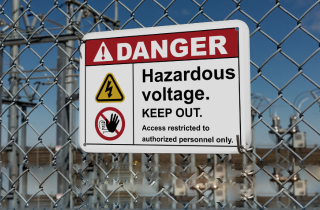
- Post signs at junctions to warn pedestrians and forklift operators to stop and allow for traffic.
- Use “STOP” signs, speed limit signs, and other traffic-control devices.
- Display reminders of forklift safety requirements where forklifts will operate.
- Place aisle identifiers, labels for inventory, and exit or emergency placement markers as needed.
10. IMPLEMENT SOLUTIONS FOR FORKLIFT SAFETY
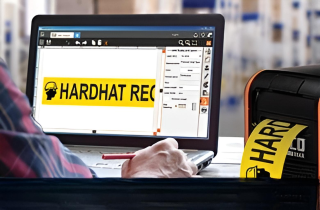
DURALABEL INDUSTRIAL PRINTERS (by Graphic Products)
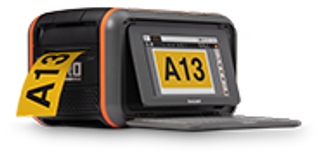
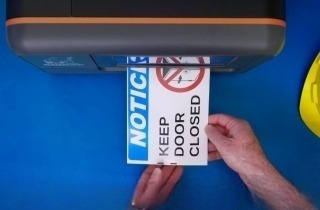
Print your own safety signage right on demand, at your facility. Create large, professional safety markings, labels, signs, banners, and more.
DuraLabel
888.326.9244
DuraLabel.com
.png)