5 Tips to Prevent
SLIPS, TRIPS, & FALLS
Infographic Transcription
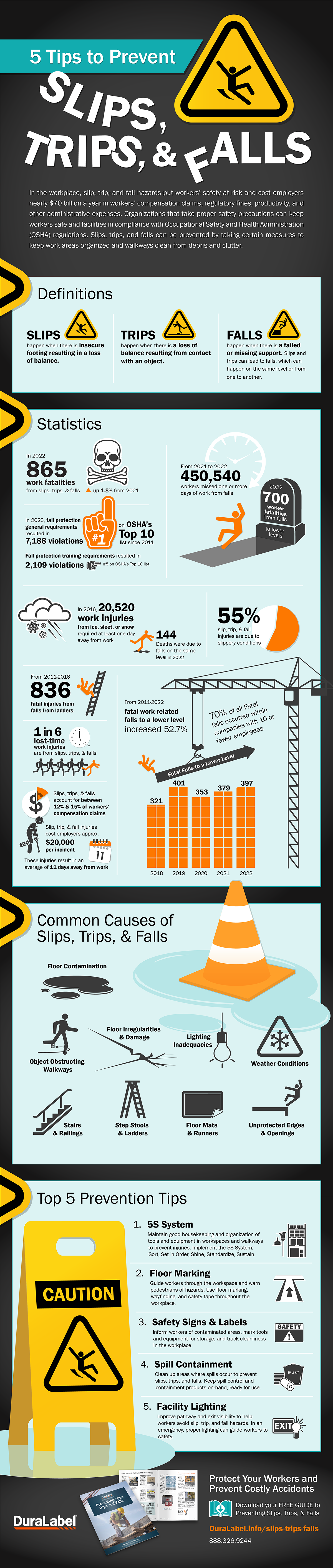
In the workplace, slip, trip, and fall hazards put workers’ safety at risk and cost employers nearly $70 billion a year in workers’ compensation claims, regulatory fines, productivity, and other administrative expenses. Organizations that take proper safety precautions can keep workers safe and facilities in compliance with Occupational Safety and Health Administration (OSHA) regulations. Slips, trips, and falls can be prevented by taking certain measures to keep work areas organized and walkways clean from debris and clutter.
Definitions
SLIPS
happen when there is insecure footing resulting in a loss of balance.
TRIPS
happen when there is a loss of balance resulting from contact with an object.
FALLS
happen when there is a failed or missing support. Slips and trips can lead to falls, which can happen on the same level or from one to another.
Statistics
In 2022
865 work fatalities
from slips, trips, & falls
▲ up 1.8% from 2021
In 2023, fall protection general requirements resulted in
7,188 violations
#1 on OSHA’s Top 10 list since 2011
Fall protection training requirements resulted in
2,109 violations
#8 on OSHA’s Top 10 list
From 2021 to 2022
450,540 workers missed one or more days of work from falls
2022
700 worker fatalities from falls
to lower levels
In 2016, 20,520 work injuries
from ice, sleet, or snow required at least one day away from work
144
Deaths were due to falls on the same level in 2022
From 2011–2016
836 fatal injuries from falls from ladders
1 in 6 lost-time work injuries are from slips, trips, & falls
Slips, trips, & falls account for between 12% & 15% of workers’ compensation claims
Slip, trip, & fall injuries cost employers approx. $20,000 per incident
These injuries result in an average of 11 days away from work
From 2011–2022
fatal work-related falls to a lower level increased 52.7%
55%
slip, trip, & fall injuries are due to slippery conditions
70% of all fatal falls occurred within companies with 10 or fewer employees
Fatal Falls to a Lower Level (chart)
2018: 321
2019: 401
2020: 353
2021: 379
2022: 397
Common Causes of Slips, Trips, & Falls
- Floor Contamination
- Object Obstructing Walkways
- Floor Irregularities & Damage
- Lighting Inadequacies
- Weather Conditions
- Stairs & Railings
- Step Stools & Ladders
- Floor Mats & Runners
- Unprotected Edges & Openings
Top 5 Prevention Tips
(Graphic text: CAUTION)
- 5S System
Maintain good housekeeping and organization of tools and equipment in workspaces and walkways to prevent injuries. Implement the 5S System: Sort, Set in Order, Shine, Standardize, Sustain.
- Floor Marking
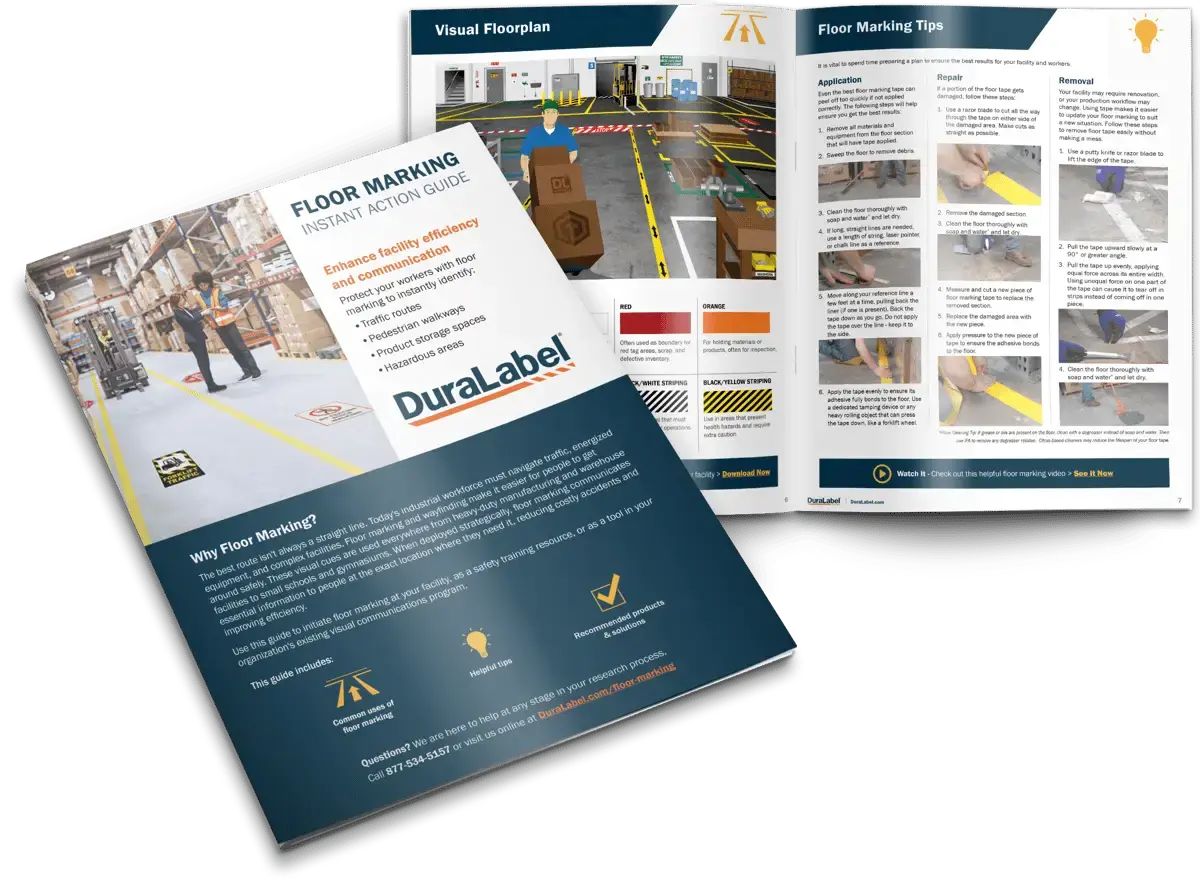
Guide workers through the workspace and warn pedestrians of hazards. Use floor marking, wayfinding, and safety tape throughout the workplace.
- Safety Signs & Labels
Inform workers of contaminated areas, mark tools and equipment for storage, and track cleanliness in the workplace.
- Spill Containment
Clean up areas when spills occur to prevent slips, trips, and falls. Keep spill control and containment products on-hand, ready for use.
- Facility Lighting
Improve pathway and exit visibility to help workers avoid slip, trip, and fall hazards. In an emergency, proper lighting can guide workers to safety.
DuraLabel
Protect Your Workers and Prevent Costly Accidents
Download your FREE GUIDE to Preventing Slips, Trips, & Falls
DuraLabel.info/slips-trips-falls
888.326.9244
.png)