.png)
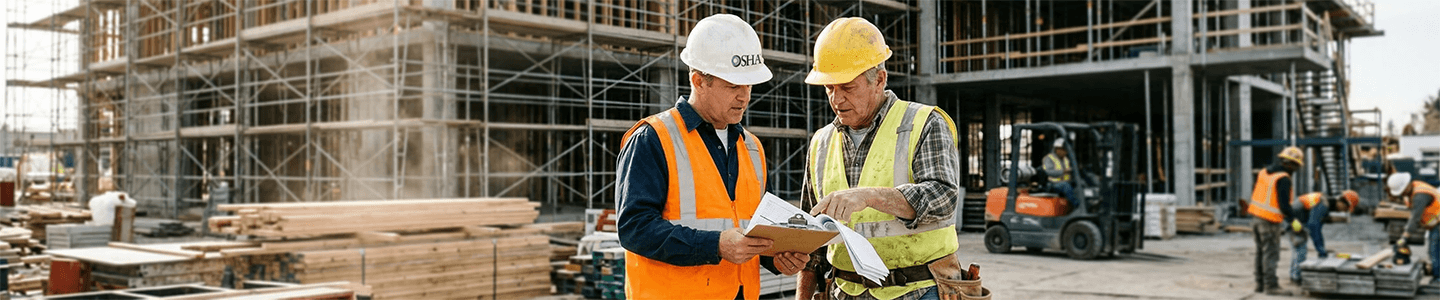
OSHA inspections often begin with a review of site safety documentation and compliance practices.
What Is the Difference Between Federal OSHA and State OSHA?
The difference between Federal Occupational Safety and Health Administration (OSHA) vs State Plan OSHA comes down to who enforces workplace safety standards and how those standards are applied.
Federal OSHA establishes nationwide safety standards under the U.S. Department of Labor. State OSHA (OSHA-approved State Plans) are operated by individual states. Approved state agencies enforce their own programs, which may include stricter or more detailed standards.
For multi-state contractors and employers, compliance expectations can shift by project location, affecting how OSHA inspections are conducted and enforced.
The sections below examine:
- How Federal OSHA and State OSHA programs differ in authority and enforcement
- Where standards commonly diverge across jurisdictions
- Why inconsistent execution increases inspection risk
- How OSHA inspections expose gaps in labeling and documentation
- How organizations can standardize compliance across state lines
Understanding these distinctions helps organizations operating across multiple states reduce regulatory risk while maintaining consistent safety practices across job sites.
Why Jurisdiction Matters Before the First Inspection
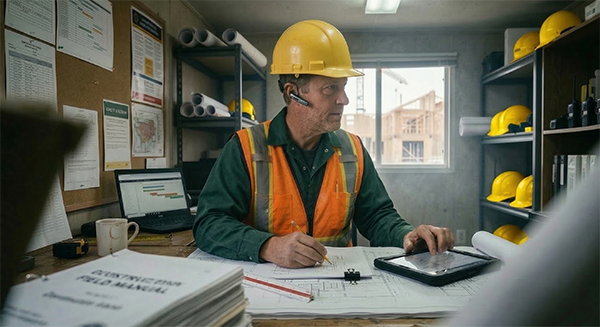
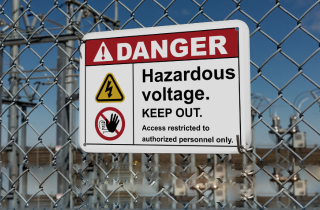
Managing multiple projects requires consistent safety systems to meet varying OSHA standards across states.
Federal OSHA sets baseline standards under 29 CFR 1910 and 1926. In states without approved plans, federal compliance officers conduct inspections and issue citations.
In states with OSHA-approved State Plans, a state agency assumes enforcement authority. These agencies must meet or exceed federal effectiveness benchmarks but may introduce additional rules, emphasis programs, or documentation requirements. Contractors can confirm jurisdiction through OSHA’s official State Plans directory.
This distinction affects compliance before work begins. A contractor mobilizing crews into California, Oregon, or Washington enters a different enforcement environment than one operating in Texas or Florida. Inspectors may apply different interpretations, emphasize different hazards, or require additional documentation.
For multi-state contractors and employers, jurisdiction is not an administrative detail. It directly affects how OSHA compliance requirements are implemented and evaluated in the field.
Where Federal and State OSHA Standards Are Different
Federal OSHA establishes baseline standards, but State OSHA programs often expand or refine those requirements. Differences commonly appear in the following areas:
- Injury and fatality reporting timelines
- Heat illness prevention programs
- Fall protection trigger heights in construction
- Confined space procedures
- Recordkeeping and electronic submission requirements
California provides a clear example. Recent updates to confined spaces in construction rules expanded employer requirements for hazard evaluation and documentation, as reported by Safety+Health Magazine. Contractors operating under Cal/OSHA must account for those changes, even if their federal confined space program meets requirements in other states.
When contractors assume federal standards apply uniformly, compliance gaps can develop quickly. Those gaps often surface during OSHA inspections.
Federal OSHA vs OSHA State Plans: A Practical Comparison
A direct comparison highlights why contractors and employers working across multiple states must approach compliance strategically.
|
Category |
Federal OSHA |
OSHA State Plans |
|
Authority |
U.S. Department of Labor |
State agency approved by OSHA |
|
Minimum Standard |
National baseline |
Must be at least as effective as federal OSHA |
|
Ability to Be Stricter |
No |
Yes |
|
Inspection Enforcement |
Federal compliance officers |
State compliance officers |
The ability to impose stricter standards drives most compliance variation. State agencies may move faster to address regional risks or expand enforcement priorities in response to local incidents.
For organizations working in multiple jurisdictions, this means compliance practices must meet the strictest applicable standard rather than defaulting to federal baseline requirements.
The Real Risk for Multi-State Contractors: Inconsistent Execution
Most contractors understand that Federal OSHA vs State OSHA programs create enforcement differences. The greater risk lies in inconsistent execution across projects.
Crews rotate between states. Supervisors manage multiple job sites. Equipment transfers from one project to another. Over time, labeling formats, documentation practices, and hazard communication methods begin to vary.
During OSHA inspections, inconsistency signals a lack of centralized control. An inspector who sees updated arc flash labels in one region and outdated formatting in another may question whether labeling and documentation are centrally managed.
This issue becomes particularly visible in areas such as:
- Electrical panel identification and arc flash labeling
- Hazard communication labeling under 29 CFR 1910.1200
- Confined space entry signage
- Lockout/tagout device identification
- Construction safety signage in high-risk areas
Even when hazards are controlled properly, inconsistent visual communication undermines credibility during OSHA inspections.
How OSHA Inspections Expose Gaps in Compliance Systems
OSHA inspections often begin with visible conditions in the field. Inspectors evaluate labeling, postings, and field documentation before reviewing written programs.
If labeling differs across job sites, several concerns arise:
- Are templates centrally controlled?
- Have recent regulatory updates been implemented companywide?
- Do supervisors understand state-specific requirements?
- Is documentation aligned with current enforcement priorities?
For multi-state contractors and employers, inspection risk increases when compliance systems operate independently in each region. A decentralized approach may function in a single-state environment but becomes unstable when applied across multiple OSHA State Plan jurisdictions.
Standardizing Compliance Across State Lines
Reducing inspection risk requires consistent execution across job sites. Contractors and employers operating across multiple states can strengthen compliance consistency by:
- Centralizing approved safety label and signage templates
- Aligning formatting with the strictest applicable state requirement
- Maintaining documented revision control for templates
- Training supervisors on jurisdiction-specific differences
This approach supports consistent execution across job sites, even when enforcement authority changes.
Standardization does not eliminate jurisdictional differences. It ensures those differences are addressed consistently across projects.
Where LabelForge PRO Supports Multi-State Contractors and Employers
.png)
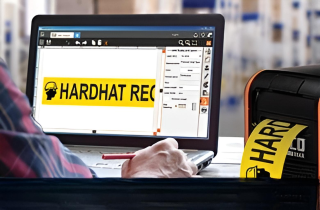
Clear, consistent labeling helps teams communicate hazards and meet OSHA compliance requirements across job sites.
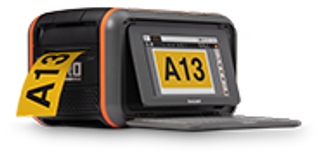
Managing OSHA compliance requirements across jurisdictions requires consistent labeling and documentation in the field. LabelForge PRO® Design Software supports this by allowing contractors to create and manage standardized labeling templates aligned with federal and state standards.
Safety managers can maintain arc flash labeling templates that reflect current NFPA 70E analyses and update hazard communication layouts to meet evolving enforcement priorities. Multi-user functionality allows approved templates to be distributed across offices and job sites, reducing variation between regions. Offline capability supports field environments where internet access may be limited.
When formatting, signal words, and symbol usage remain consistent across states, labeling aligns more closely with inspection expectations. LabelForge PRO helps contractors manage visual compliance elements in a controlled and documented manner.
The Bottom Line for Multi-State Contractors and Employers
Federal OSHA establishes nationwide workplace safety standards. OSHA State Plans may expand or strengthen those standards based on regional priorities. Multi-state contractors and employers must account for both when implementing safety programs.
Jurisdictional differences influence reporting, enforcement, documentation, and inspection outcomes. Contractors who standardize labeling and documentation across state lines reduce variation, strengthen audit readiness, and lower risk during OSHA inspections.
Consistent labeling and documentation demonstrate control across job sites. In a multi-state operating environment, that control supports both regulatory compliance and operational stability.
Recommended DuraLabel® Product for OSHA Compliance
Federal OSHA and OSHA State Plans may enforce standards differently, but the goal remains the same: clear, consistent hazard communication across every job site. For organizations operating in multiple jurisdictions, standardized labeling supports OSHA compliance requirements and helps demonstrate consistent compliance during OSHA inspections.
Download LabelForge PRO Design Software for free to create compliant labels immediately. The download includes full functionality, allowing teams to standardize safety labels for arc flash warnings, hazard communication, equipment identification, construction signage, and more.
For contractors reviewing their electrical and construction labeling programs, DuraLabel offers a free Arc Flash Labeling Quick Start Guide with practical steps aligned to current OSHA and NFPA 70E requirements.
Have questions about aligning your labeling program across multiple states? Call 1-888-789-7964 to speak with a DuraLabel expert.
Read Next:
6 Industrial Labeling Mistakes to Fix Before Year-End Audits
How the University of Miami Improved Pipes & Utilities with Toro Max

What is HazCom? Your Guide to Chemical Labeling, GHS, & OSHA Standards
What Is HazCom? OSHA’s Hazard Communication Standard (HazCom) is a regulatory framework requiring chemical ...
Read
OSHA and Canada Partner for Chemical Labeling System
Canada and the United States have been working together to align their laws for classifying and labeling ...
Read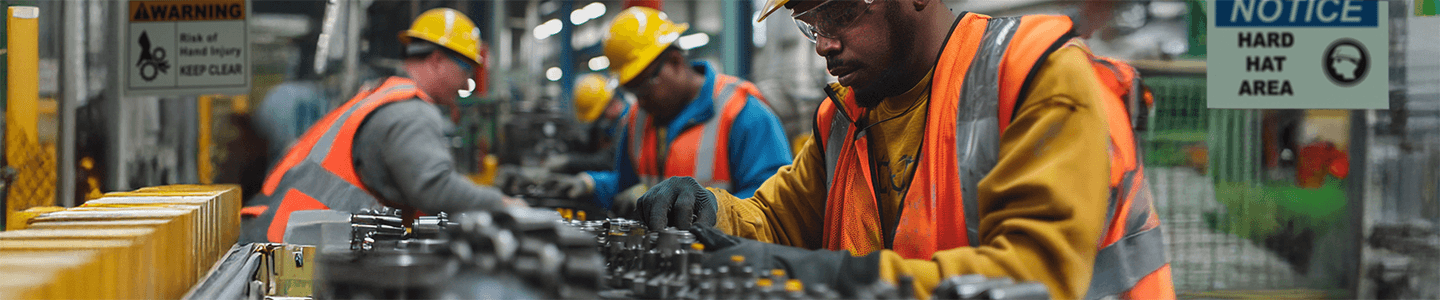
OSHA Requirements for Employers and the Real Cost of Noncompliance
What Are OSHA Requirements for Employers? Occupational Health and Safety Administration (OSHA)requirements ...
ReadTake Action
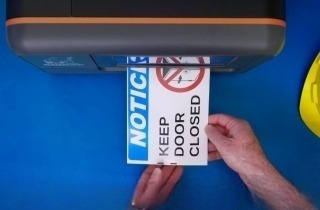
Print Your Own Signs
Free Label Design Software