- Home
- >
- Resources
- >
- Infographics
- >
- Cold Stress Symptoms, First Aid, & Prevention
Cold Stress Symptoms, First Aid, & Prevention
How to Treat Cold Stress?
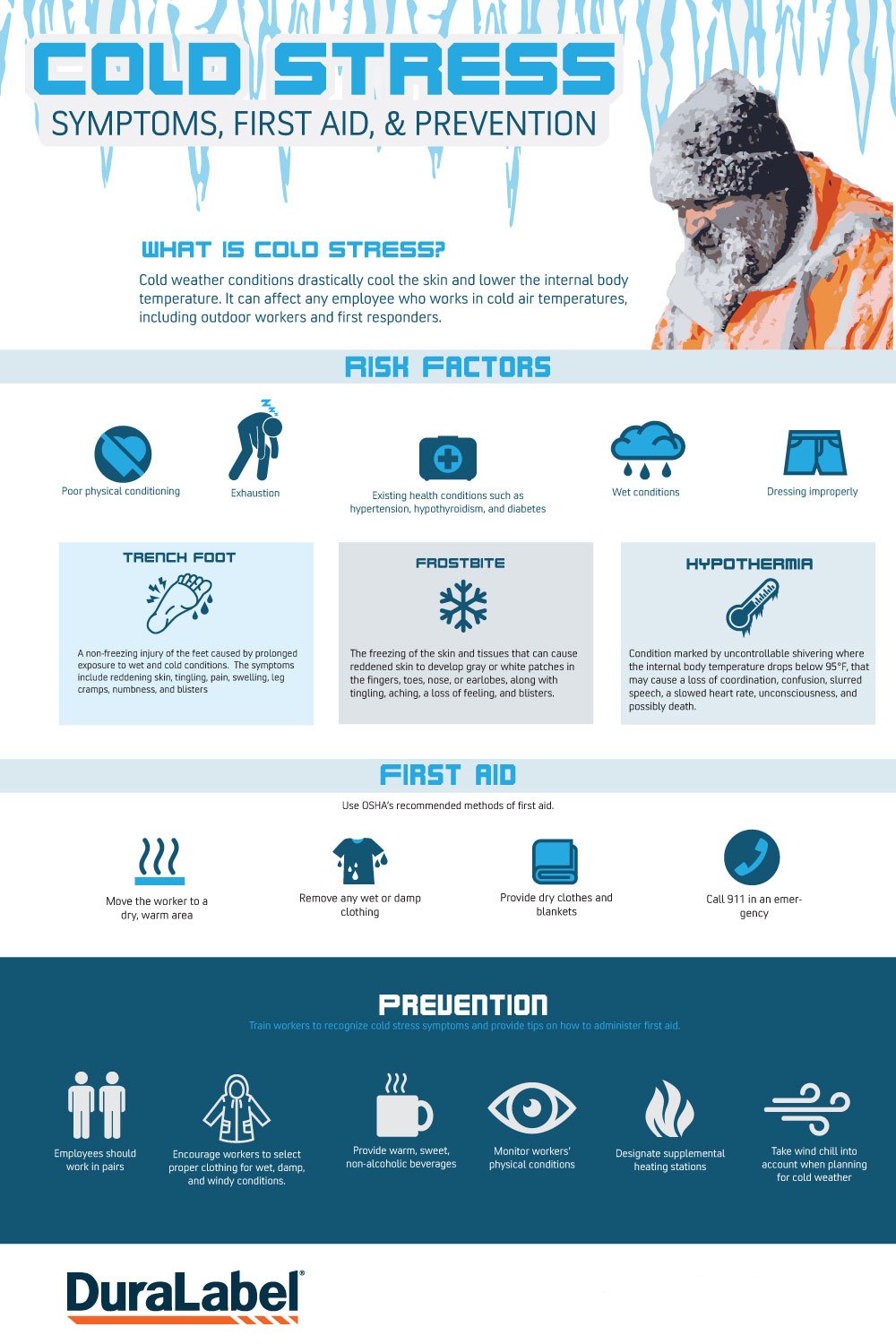
Infographic Transcription
COLD STRESS
SYMPTOMS, FIRST AID, & PREVENTION
WHAT IS COLD STRESS?
Cold weather conditions drastically cool the skin and lower the internal body temperature. It can affect any employee who works in cold air temperatures, including outdoor workers and first responders.
RISK FACTORS
-
Poor physical conditioning
-
Exhaustion
-
Existing health conditions such as hypertension, hypothyroidism, and diabetes
-
Wet conditions
-
Dressing improperly
TRENCH FOOT
A non-freezing injury of the feet caused by prolonged exposure to wet and cold conditions. The symptoms include reddening skin, tingling, pain, swelling, leg cramps, numbness, and blisters
FROSTBITE
The freezing of the skin and tissues that can cause reddened skin to develop gray or white patches in the fingers, toes, nose, or earlobes, along with tingling, aching, a loss of feeling, and blisters.
HYPOTHERMIA
Condition marked by uncontrollable shivering where the internal body temperature drops below 95°F, that may cause a loss of coordination, confusion, slurred speech, a slowed heart rate, unconsciousness, and possibly death.
FIRST AID
Use OSHA’s recommended methods of first aid.
-
Move the worker to a dry, warm area
-
Remove any wet or damp clothing
-
Provide dry clothes and blankets
-
Call 911 in an emergency
PREVENTION
Train workers to recognize cold stress symptoms and provide tips on how to administer first aid.
-
Employees should work in pairs
-
Encourage workers to select proper clothing for wet, damp, and windy conditions.
-
Provide warm, sweet, non-alcoholic beverages
-
Monitor workers’ physical conditions
-
Designate supplemental heating stations
-
Take wind chill into account when planning for cold weather