GHS
GLOBALLY HARMONIZED SYSTEM
Infographic Transcription
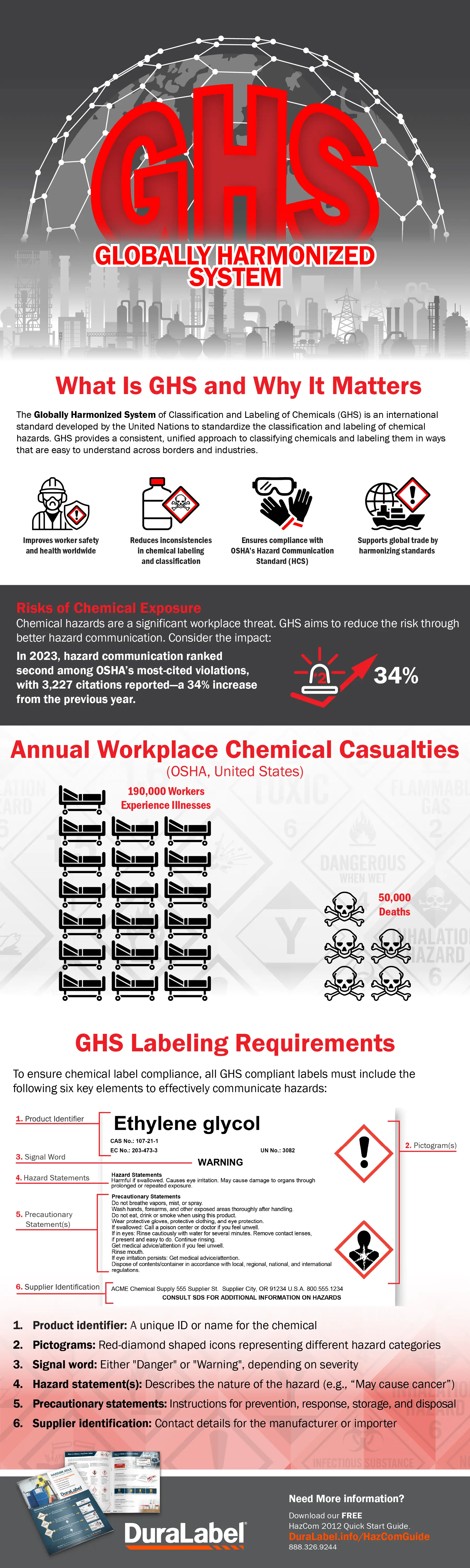
What Is GHS and Why It Matters
The Globally Harmonized System of Classification and Labeling of Chemicals (GHS) is an international standard developed by the United Nations to standardize the classification and labeling of chemical hazards. GHS provides a consistent, unified approach to classifying chemicals and labeling them in ways that are easy to understand across borders and industries.
- Improves worker safety and health worldwide
- Reduces inconsistencies in chemical labeling and classification
- Ensures compliance with OSHA’s Hazard Communication Standard (HCS)
- Supports global trade by harmonizing standards
Risks of Chemical Exposure
Chemical hazards are a significant workplace threat. GHS aims to reduce the risk through better hazard communication. Consider the impact:
In 2023, hazard communication ranked second among OSHA’s most-cited violations, with 3,227 citations reported—a 34% increase from the previous year.
34%
Annual Workplace Chemical Casualties
(OSHA, United States)
190,000 Workers Experience Illnesses
50,000 Deaths
GHS Labeling Requirements
To ensure chemical label compliance, all GHS compliant labels must include the following six key elements to effectively communicate hazards:
(Example label content shown)
Ethylene glycol
CAS No.: 107-21-1
EC No.: 203-473-3
UN No.: 3082
WARNING
Hazard Statements
Harmful if swallowed. Causes eye irritation. May cause damage to organs through prolonged or repeated exposure.
Precautionary Statements
Do not breathe vapors, mist, or spray.
Wash hands, forearms, and other exposed areas thoroughly after handling.
Do not eat, drink or smoke when using this product.
Wear protective gloves, protective clothing, and eye protection.
If swallowed: Call a poison center or doctor if you feel unwell.
If in eyes: Rinse cautiously with water for several minutes. Remove contact lenses, if present and easy to do. Continue rinsing.
Get medical advice/attention if you feel unwell.
Rinse mouth.
If eye irritation persists: Get medical advice/attention.
Dispose of contents/container in accordance with local, regional, national, and international regulations.
ACME Chemical Supply 555 Supplier St. Supplier City, OR 91234 U.S.A. 800.555.1234
CONSULT SDS FOR ADDITIONAL INFORMATION ON HAZARDS
The six required label elements
- Product identifier: A unique ID or name for the chemical
- Pictograms: Red-diamond shaped icons representing different hazard categories
- Signal word: Either “Danger” or “Warning”, depending on severity
- Hazard statement(s): Describes the nature of the hazard (e.g., “May cause cancer”)
- Precautionary statements: Instructions for prevention, response, storage, and disposal
- Supplier identification: Contact details for the manufacturer or importer
Need More information?
Download our FREE HazCom 2012 Quick Start Guide.
DuraLabel.info/HazComGuide
888.326.9244
DuraLabel
.png)