.png)
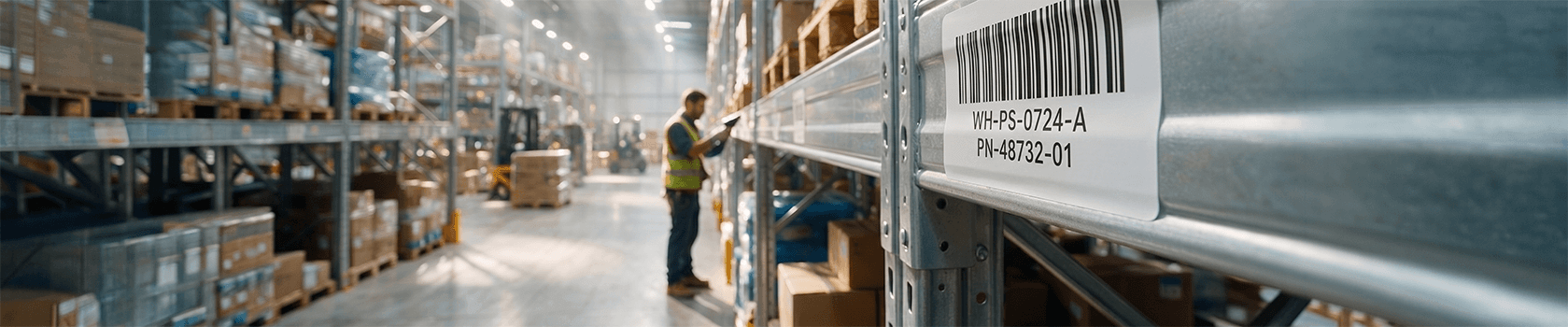
Barcode labels help warehouse teams quickly identify rack locations and improve inventory accuracy.
What Are Barcode Stickers Used For?
Barcode stickers, often referred to as barcode labels in industrial environments, identify and track assets, inventory, equipment, and products throughout a facility. They help employees locate materials faster, reduce manual data entry, improve inventory accuracy, and simplify asset management. Durable barcode labels remain readable despite abrasion, moisture, chemicals, and heavy handling, allowing scanners to capture information reliably throughout the label's service life.
Whether a facility is managing thousands of warehouse SKUs or tracking expensive production equipment, barcode labels provide the visibility needed to keep operations organized, efficient, and accurate.
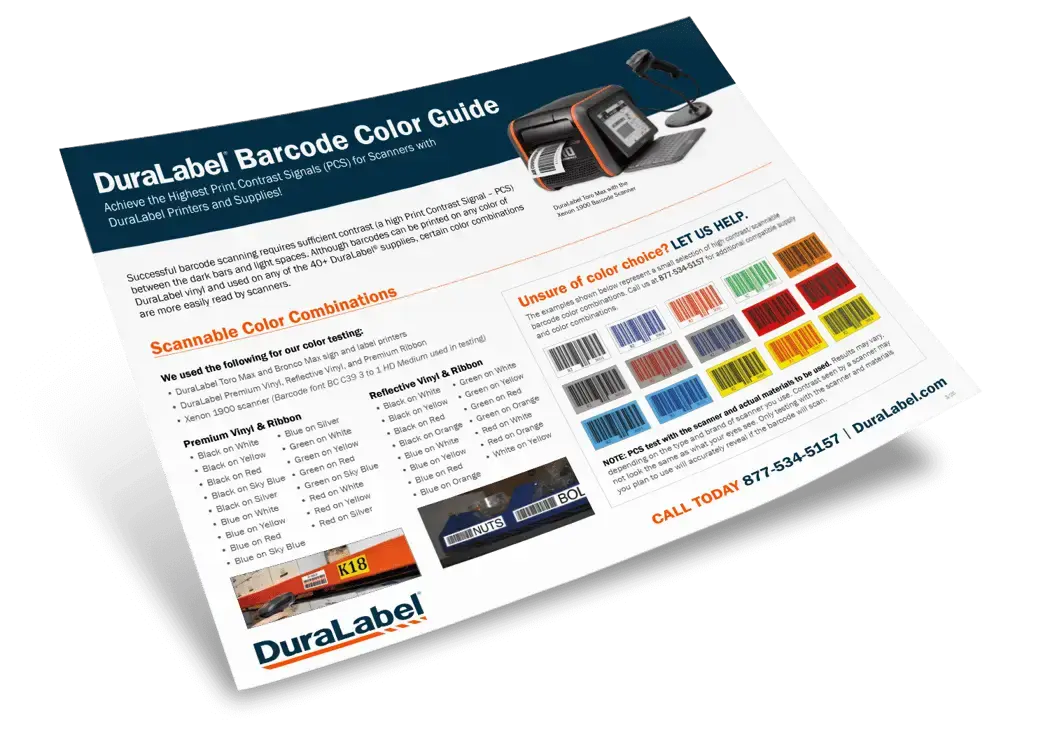
For facilities creating a standardized labeling system, download the free DuraLabel® Barcode Color Chart as a simple reference for selecting barcode colors across different applications.
Why Barcode Labels Matter in Industrial Facilities
Every misplaced pallet, missing tool, or incorrect inventory count costs time and money. Without a standardized identification system, employees spend valuable time searching for equipment, verifying inventory, or correcting avoidable mistakes.
Barcode labels replace manual tracking with a fast, repeatable process. Instead of typing serial numbers or writing information on paper, workers simply scan a barcode to retrieve the data they need instantly.
Industrial facilities commonly use barcode labels to:
- Track inventory throughout receiving, storage, and shipping
- Identify equipment and fixed assets
- Improve warehouse organization
- Support maintenance and inspection records
- Reduce manual data entry errors
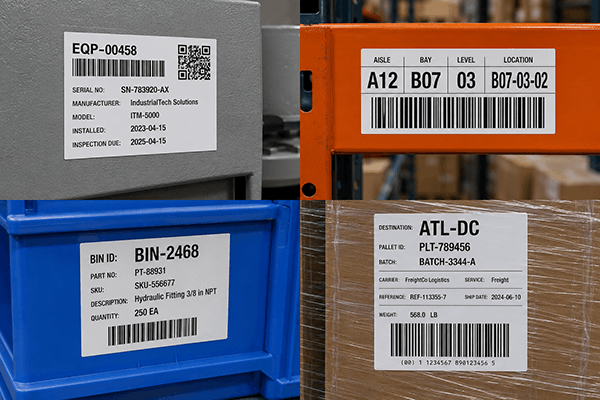
Barcode labels support a wide range of applications, from asset tracking to warehouse and shipping operations.
For example, a maintenance technician inspecting an air compressor can scan its barcode label to access maintenance history, service dates, replacement parts, and inspection records within seconds. That same task could otherwise require searching spreadsheets or paper logs. Across hundreds—or even thousands—of assets, those time savings have a measurable impact on productivity.
Where Are Barcode Stickers Used in Industrial Facilities?
Although industrial professionals typically refer to them as barcode labels, many buyers search for barcode stickers when researching identification solutions. Regardless of the terminology, they serve the same purpose: providing fast, accurate identification throughout a facility.
|
Application |
Information Included |
Common Location |
Primary Benefit |
|
Asset tracking |
Asset ID, serial number, QR code |
Equipment, machinery, IT assets |
Simplifies maintenance and asset audits |
|
Inventory management |
SKU, lot number, part number |
Shelves, bins, pallets |
Improves inventory accuracy |
|
Warehouse location labels |
Rack, aisle, bin location |
Warehouse racking |
Speeds picking and put-away |
|
Work-in-process tracking |
Job number, production stage |
Manufacturing lines |
Tracks products throughout production |
|
Shipping and receiving |
Shipping barcode, destination |
Boxes and pallets |
Reduces shipping errors |
Many facilities also combine barcode labels with color coding, equipment labels, and visual management systems to create an organized workplace. Employees spend less time searching for materials and more time completing productive work.
Choosing Barcode Labels That Last
Not every barcode label is designed for industrial environments. Labels that perform well in an office or retail setting often fail when exposed to moisture, chemicals, abrasion, or heavy handling, making material selection just as important as the barcode itself.
Facilities should evaluate several factors before selecting barcode labels.
Surface compatibility
Different materials require different adhesives. Smooth painted equipment, textured plastic totes, powder-coated shelving, and rough metal surfaces each present unique adhesion challenges.
Environmental conditions
Barcode labels should match the conditions where they'll be used, including:
- Moisture and washdowns
- UV exposure
- Oils and grease
- Industrial chemicals
- High or low temperatures
- Frequent abrasion
For example, barcode labels applied to warehouse shelving experience very different conditions than labels attached to outdoor equipment or chemical containers. Choosing the appropriate label material helps maintain readability throughout the label's lifespan.
Print quality
High-resolution thermal transfer printing produces crisp barcode lines that scanners can consistently read. Sharp printing also improves the legibility of serial numbers, lot codes, and other variable information printed alongside the barcode.
Common Barcode Labeling Mistakes
Even the best barcode system can fall short without consistent labeling standards. When departments create labels using different formats, sizes, or naming conventions, scanning becomes less reliable and inventory accuracy begins to suffer.
Some of the most common mistakes include:
- Using multiple barcode formats throughout one facility
- Printing labels too small for reliable scanning
- Applying labels to dirty or uneven surfaces
- Choosing consumer-grade barcode stickers instead of industrial barcode labels
- Waiting too long to replace worn or damaged labels
Imagine a warehouse where every department creates its own barcode labels. One team prints Code 128 labels while another uses Code 39. Some labels include part numbers while others don't. Label sizes vary across departments.
The result is inconsistent scanning, employee confusion, and unnecessary delays. Standardized barcode templates help eliminate those problems before they affect day-to-day operations.
How Barcode Labels Improve Inventory Accuracy
Warehouse operations often see the greatest benefit from barcode labeling because nearly every inventory movement depends on accurate identification. From receiving to shipping, barcode labels help employees complete each task faster while reducing manual errors.
Consider a distribution center with 40,000 inventory locations. Without barcode labels, employees manually record pallet movements throughout the day. Small data entry errors gradually create inventory discrepancies that require cycle counts and additional labor to correct.
With durable barcode labels applied to racks, pallets, and inventory bins, workers simply scan each movement as it happens. Inventory updates automatically, reducing errors while giving managers better visibility into available stock.
This approach also shortens employee training. New workers quickly learn scanning procedures instead of memorizing warehouse layouts or complicated inventory numbering systems. Managers gain greater confidence that inventory records reflect what's actually on the shelf—making purchasing and fulfillment decisions more reliable.
Why Barcode Quality Matters
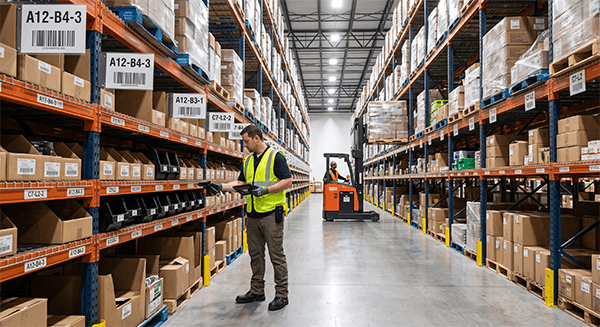
Barcode labels improve inventory visibility and help reduce picking and stocking errors.
A barcode only delivers value if scanners can read it consistently. If labels become faded, scratched, or partially detached, employees lose the speed and accuracy that barcode systems are designed to provide.
Several factors influence barcode performance, including print resolution, label material, adhesive quality, and overall durability. Even a perfectly designed barcode becomes ineffective if moisture, abrasion, or chemical exposure damages the printed image.
Industrial facilities often install barcode labels on equipment expected to remain in service for years. During that time, labels may encounter:
- Forklift traffic
- Vibration
- Repeated cleaning
- Harsh chemicals
- Constant handling
Durable barcode labels maintain reliable scanning performance under those demanding conditions while reducing replacement frequency and minimizing downtime.
Facilities should also inspect barcode labels during preventive maintenance. Replacing worn labels before they become unreadable helps maintain accurate asset records, reduces rescanning attempts, and keeps daily operations running efficiently.
DuraLabel Product and Resource
Facilities that create barcode labels in-house need software that delivers consistency from the first label to the thousandth. LabelForge® PRO Design Software makes it easy to create professional barcode labels with built-in barcode generation and customizable templates. When paired with a DuraLabel Industrial Sign and Label System, teams can print durable barcode labels on demand for inventory, asset tracking, and equipment identification.
To learn more about implementing an effective barcode labeling system, download the free DuraLabel Barcode Labeling Guide. It covers barcode types, applications such as asset tracking and inventory management, and best practices for implementing barcode labeling in industrial facilities.
Every facility has different tracking requirements. If there's a question about selecting the right barcode labeling solution, speak with a DuraLabel labeling expert at 888-789-7964.
Read Next:
Data Center Labels for Better Organization, Safety, and Uptime
How Papé Streamlined Fleet Tracking with DuraLabel
Why Upgrade to the DuraLabel Kodiak Max Industrial Sign & Label System
How Can Upgrading to the Kodiak Max Reduce Downtime? Upgrading to the DuraLabel® Kodiak® Max Industrial Sign ...
Read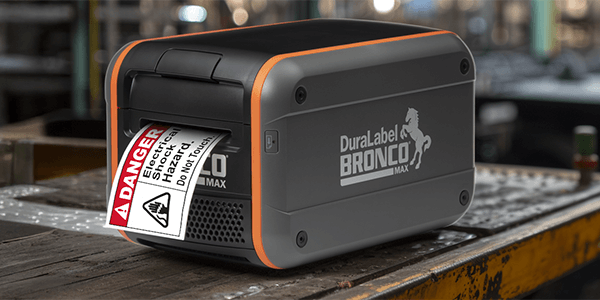
Why Upgrade to the DuraLabel Bronco Max Industrial Sign & Label System
What Is a Bronco Max Printer Used For? The DuraLabel® Bronco® Max Industrial Sign and Label System is used to ...
Read
DIY Labels or Premium Label Supply? Choosing the Right Safety Signs
Article Summary When it comes to workplace safety labeling, facilities typically choose between premium vinyl ...
ReadTake Action
Print Your Own Signs
Free Label Design Software