.png)
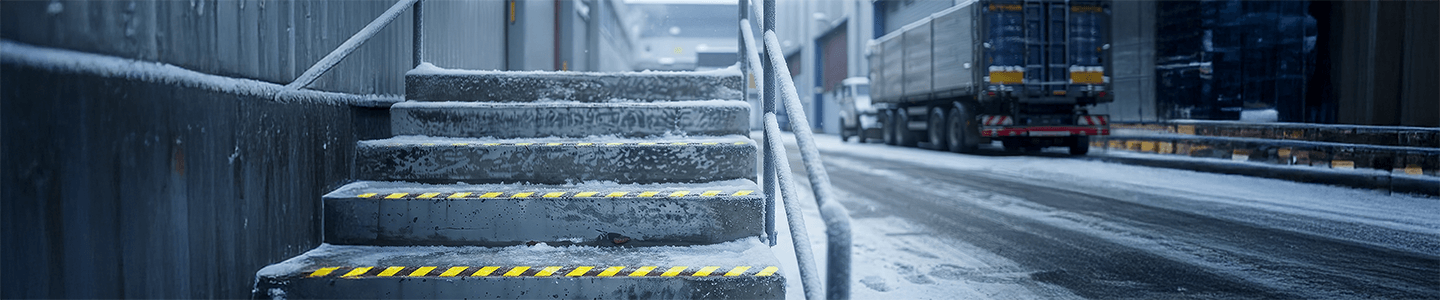
How Can Facilities Reduce Winter Slip and Visibility Risks?
Facilities can reduce winter slip and visibility risks by improving low-light visibility and increasing traction in high-risk areas. Reflective labeling helps workers and vehicles navigate safely in winter darkness, while non-slip labeling adds grip where snowmelt and ice make surfaces unpredictable.
The sections below break down why winter hazards escalate so quickly, where visibility and traction gaps cause injuries, and how reflective and non-slip labeling helps facilities stay safer and compliant throughout the season.
- Why winter hazards spike even in familiar facilities
- What winter-ready controls teams look for first
- Where reflective labeling has the greatest impact
- How non-slip labeling reduces fall risk
- How to choose winter-rated reflective and non-slip supplies
- How winter labeling connects to safety expectations and liability
- DuraLabel resources that support winter floor marking
- A simple winter labeling plan facilities can use this week
Winter conditions rarely fail all at once. They build gradually, often in places workers know best. Understanding why those risks escalate is the first step toward controlling them.
Why Do Winter Safety Risks Spike Even in Familiar Facilities?
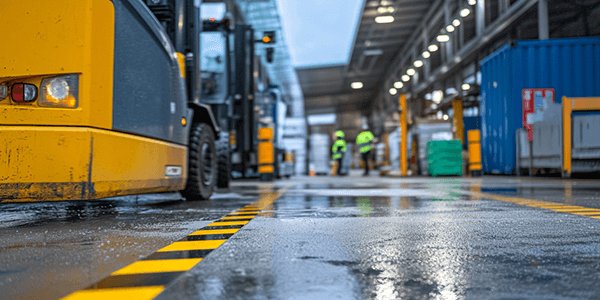
Winter does not invent new hazards; it amplifies the ones already there. Parking lots lose contrast under early darkness. Snowbanks hide curbs and stair edges. Entryways turn slick once meltwater gets tracked inside. The Occupational Health and Safety Administration (OSHA) flags winter weather as a predictable source of workplace injury, especially where icy surfaces and low visibility go unmanaged.
Federal injury data shows the scale of the problem. The Bureau of Labor Statistics (BLS), as reported by SFM, the work comp experts, has logged over 20,000 ice-, sleet-, and snow-related workplace injuries tied to ice, sleet, and snow in a typical year, with falls with consistently ranking among the leading causes of days away from work.
What makes winter risk frustrating is that most of it is preventable. The same parking lot workers cross daily becomes a fall hazard when snowbanks obscure curbs and daylight disappears earlier each shift. The same interior threshold that feels harmless in summer turns into a slick runway once meltwater gets tracked inside. Add distracted movement, bulky outerwear, and the instinct to hurry through the cold, and injuries start to look random until the pattern becomes obvious.
That pattern is why safety teams and facility managers focus early on improving visibility and traction. They are not reacting to isolated incidents. They are responding to known seasonal conditions.
Reflective and non-slip labeling address two sides of the same problem. Reflective labeling improves hazard visibility in low light, fog, rain, and snow. Non-slip labeling adds traction on stairs, ramps, entrances, and equipment steps where wet boots and ice reduce friction. Used together, they help workers see hazards sooner and maintain footing where it matters most.
What Are Workers and Managers Searching for this Winter?
Once winter conditions settle in, facility teams tend to look for the same types of controls year after year. The priorities are consistent. Solutions need to install quickly, withstand moisture and foot traffic, and reduce risk without requiring shutdowns or major layout changes.
That approach aligns with OSHA guidance on winter hazards. The agency urges employers to clear snow and ice from walking surfaces and apply deicers quickly after storms, reinforcing the need for practical, immediately deployable controls.
In practice, this pushes many teams toward reflective floor marking for low-light navigation and slip-resistant industrial floor marking for entrances, stairs, and ramps. The goal is not a redesign of the facility. It is targeted control. Facilities want to address seasonal hazards where they actually happen: at thresholds, elevation changes, and shared traffic zones.
That focus on visibility and traction leads directly to where reflective labeling delivers the most value.
Where Reflective Labeling Prevents Common Winter Incidents
Reflective labeling proves most effective in areas where winter conditions erase visual cues workers rely on the rest of the year. Snow, early darkness, and glare flatten depth perception, making it harder to judge edges, elevation changes, and traffic boundaries.
Common winter priority zones include:
- Outdoor approaches and sidewalks: Reflective edge markings help workers identify curbs, steps, and transitions before footing becomes unstable, particularly during early morning and evening hours when natural light is limited.
- Loading docks and yard lanes: Winter storms reduce visibility while vehicle traffic continues, often under tight schedules. Reflective industrial floor marking helps define lanes, crossings, and hazard zones, so drives and pedestrians can navigate shared spaces more safely, even in poor weather.
- Warehouse aisles and indoor low-light areas: Reflective industrial floor marking supports navigation when glare from wet floors and artificial lighting distorts normal sightlines. Clear pedestrian paths, forklift lanes, and emergency routes reduce confusion and hesitation, which are common contributors to winter near misses.
In each of these environments, reflective labeling restores visual information that winter conditions take away.
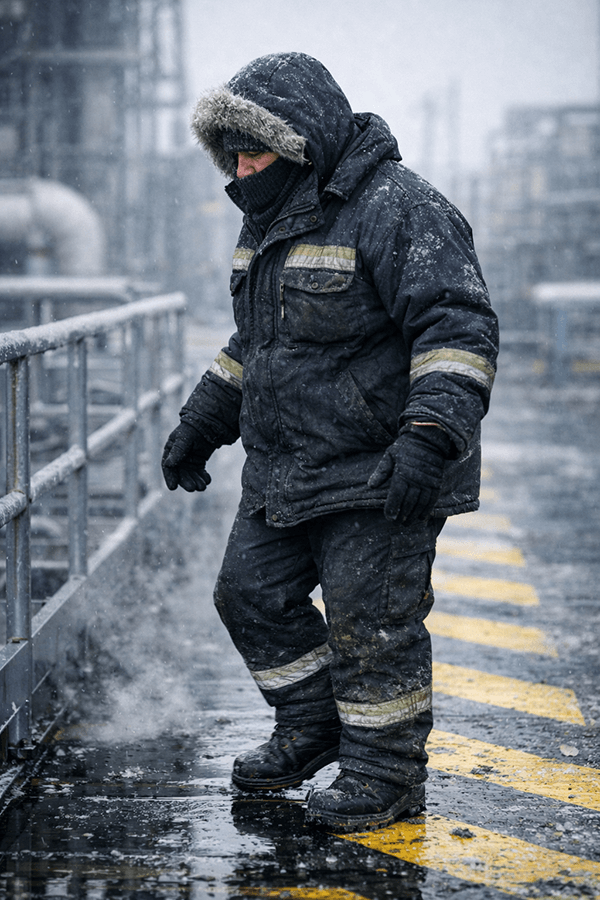
How Non-Slip Labeling Reduces Falls at Entrances, Stairs, and Ramps
Winter slip hazards tend to appear in the same locations across facilities. Moisture is tracked indoors, surfaces remain wet for extended periods, and traction drops where foot traffic is heaviest. Non-slip labeling helps by adding grip at the point of contact without requiring flooring replacement or extended downtime.
Non-slip labeling is most effective in these winter hot spots:
- Entryways and transition zones: Most winter slips happen in the first several feet inside a door, where meltwater builds up. Traction labels increase grip without the need to replace flooring.
- Stairs and step edges: Cold, moisture and uneven wear increase slip risk on stair treads. Slip-resistant labeling helps stabilize footing during ascent and descent, when a small misstep can lead to a serious fall.
- Ramps and sloped walkways: Inclines amplify traction loss, especially when workers carry tools or materials. Non-slip labeling increases grip where momentum and moisture overlap.
- High-traffic areas: Areas near time clocks, breakrooms, locker rooms, and loading entrances often stay damp due to constant foot traffic. Non-slip labeling provides consistent traction where congestion increases the risk of sudden stops and slips.
Applied early in the season, these measures help reduce winter fall risk before conditions and foot traffic wear down untreated surfaces. Facilities can maintain safer walking surfaces throughout the winter while minimizing disruptions to daily operations by proactively targeting these high risk areas
Choosing Winter-Rated Reflective and Non-Slip Supplies
Not all safety supplies are built for winter conditions. Products that perform well in dry, controlled environments often fail once temperatures fluctuate and moisture becomes constant.
Winter quickly exposes weaknesses. Adhesives lift as surfaces expand and contract. Reflective materials lose effectiveness when coated with grime or moisture. Traction products wear down under heavy boots, carts, and repeated cleaning. When controls fail, workers begin stepping around them, which undermines their purpose.
Facilities often begin with a short list of winter-proven options:
- REFLECT High-Intensity Reflective Floor Tape: Used in dark aisles, dock edges, and outdoor walkways where visibility drops quickly during winter shifts.
- TREAD Waterproof Anti-Slip Floor Tape: Designed for entrances and interior walkways where tracked-in snow melt creates persistent slip hazards.
- TREAD Extra-Coarse Anti-Slip Safety Floor Tape: Best suited for heavy-traffic areas exposed to ice, grit, and moisture.
Additional reflective and slip-resistant options are available in the full DuraLabel industrial floor marking tape lineup.
DuraLabel Winter Safety Resources
Winter safety is most effective when it is systematic rather than reactive. Facilities that plan for seasonal hazards early are better positioned to maintain safe movement, clear communication, and consistent operations as conditions change.
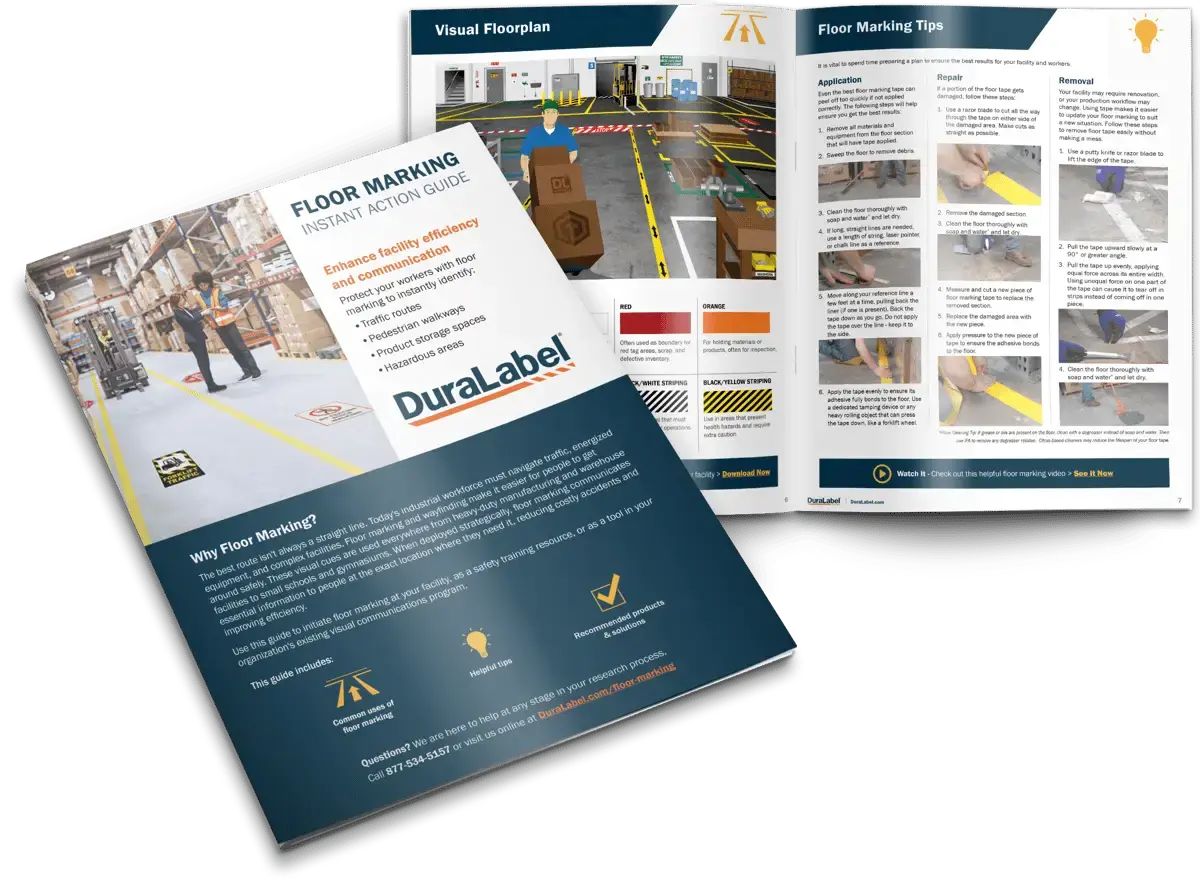
For teams looking for a practical starting point, DuraLabel’s Floor Marking Quick Start Guide outlines the foundational steps for implementing effective industrial floor marking. The guide explains how to define pedestrian and vehicle pathways, identify hazard zones, and support visual communication programs that remain effective throughout winter conditions.
DuraLabel supports winter safety planning with industrial-grade reflective and non-slip labeling supplies designed for cold, wet, and high-traffic environments. These materials are built to maintain visibility and traction through freeze-thaw cycles, moisture exposure, and repeated foot traffic.
If winter conditions also require updated safety signs or compliant labels, LabelForge® PRO Design Software can serve as an additional resource. LabelForge PRO is a free sign and label design software that includes built-in tools for creating OSHA-, ANSI/ASME-, and NFPA-aligned labels, along with templates for HazCom/GHS, arc flash, and other safety applications.
For facilities managing broader visual workplace needs, DuraLabel’s industrial floor marking resource library provides additional guides and best-practice tools for maintaining consistent pathways and standardized visual cues across changing conditions.
Have questions about winter labeling strategies or material selection? Call 1-888-789-7964 to connect with a DuraLabel safety specialist.
Read Next:
6 Industrial Labeling Mistakes to Fix Before Year-End Audits
Reflective Floor Tape: Illuminating Safety

Identify Slip, Trip, and Fall Hazards: Expert Safety Tips
February marks a good time to shore up slip, trip, and fall hazards that are particularly acute when it's ...
Read
Floor Marking Helps Eliminate Confusion
Floor marking is a great way to indicate where pedestrian traffic should go. It also is a great way to ...
Read
Types of Floor Marking for Safety, Visibility, and Navigation
What Are the Types of Floor Marking? Types of floor markinginclude colored tape, glow-in-the-dark strips, and ...
ReadTake Action
Print Your Own Signs
Free Label Design Software