.png)

STEP 2 - DESCRIBE A TASK
Observe workers in their normal process, and ask them for details.
What kind of work is being done?
Who does this work, where & when?
What tools or equipment are involved?
What is the step-by-step process for completing this task?
These details will help you identify possible problems and solutions, along with connections between tasks that may be important.
STEP 3 - IDENTIFY THE HAZARD
Spot the hazards, identify the triggers, and assess the consequences.
HAZARDS
What are the possible sources of injury?
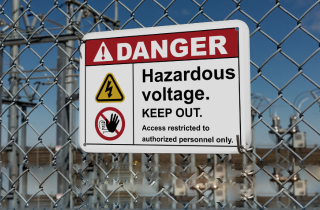
High Voltages
Toxic Chemicals
Moving Parts
TRIGGERS
What would have to go wrong for an injury to occur?
Worker Tripping
Motor Overheating
Valve Failing
CONSEQUENCES
What type and severity of injury could result?
Serious Burns
Asphyxiation
Minor Bruises
This step in the JHA process shares some of its ideas with a Risk Assessment, which is required by several standards. Risk Assessments allow employers to compare the relative dangers of different tasks. Consider how severe an injury could be (the Hazards and Consequences) and how likely it is for that injury to occur (the probability of the Trigger); the combination of the two is the overall risk.
STEP 4 - ASSIGN PROTECTIVE CONTROLS
Example Situation:
Your facility has a work station where products are machined to shape, but then have to be cleaned with a TOXIC SOLVENT to remove the machining oils.
Follow the Hierarchy of Controls:
- ELIMINATION - Get rid of the source of hazard
Change the machining process to avoid fouling the product, no need to use the toxic solvents for cleaning - SUBSTITUTION - Replace a serious hazard with a less-serious one
Replace the toxic solvent if possible with a less dangerous alternative - ENGINEERING CONTROLS - Change the work area to separate workers from the hazard
Install a fume hood to remove harmful vapors from the work area - ADMINISTRATIVE CONTROLS - Change work procedures to protect workers
Limit workers’ exposure to certain times, minimizing the chance that the hazard will result in injury - PERSONAL PROTECTIVE EQUIPMENT - Last line of defense
Require PPE to be worn to protect the worker from the hazard
Steps 1 and 2 address the HAZARD directly, stopping the problem at the source.
Steps 3 and 4 address the TRIGGER, making an injury event less likely.
Step 5 mitigates the CONSEQUENCE, reducing or eliminating the severity of an injury.
It’s important to follow the sequence of controls in the hierarchy, because the most effective protection happens in the first steps.
NOW WHAT?
Now that you’ve described a task, identified its hazards, and assigned protective controls, it’s time to document your plan. Write down:
All of your JHA’s findings: existing processes and hazards, and recommended changes
Safe work procedures that will be followed
Any special equipment that needs to be used
The date of the analysis and the person responsible
Don’t forget to review your JHA with the affected workers. Employees need to understand how to work safely in their workplace!
DuraLabel
Need Assistance with your Job Hazard Analysis? Contact us today!
888.326.9244 | DuraLabel.com