.png)

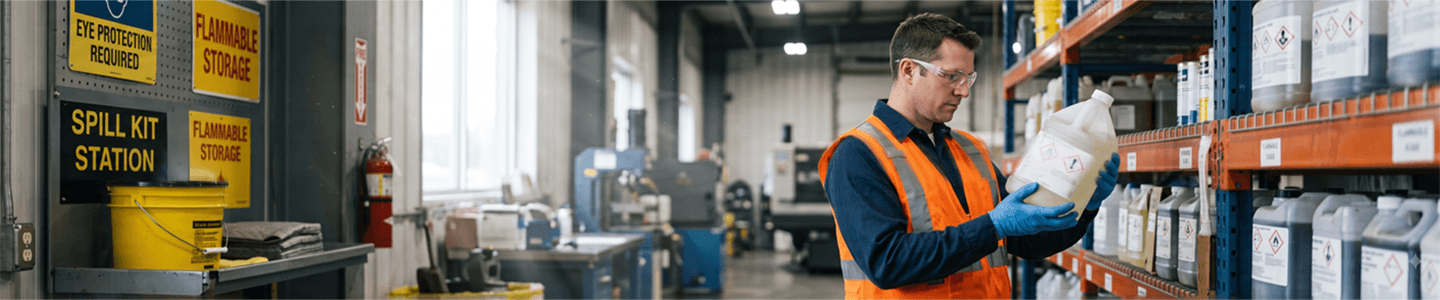
Properly labeled chemical containers help employees recognize hazards and follow safe handling procedures.
What Are Chemical Hazards?
Chemical hazards are substances that can harm people, property, or the environment through exposure or improper handling. They range from cleaning solvents and fuels to corrosive chemicals and compressed gases used every day in industrial facilities. Recognizing these hazards helps prevent injuries and supports Occupational Safety and Health Administration (OSHA) compliance.
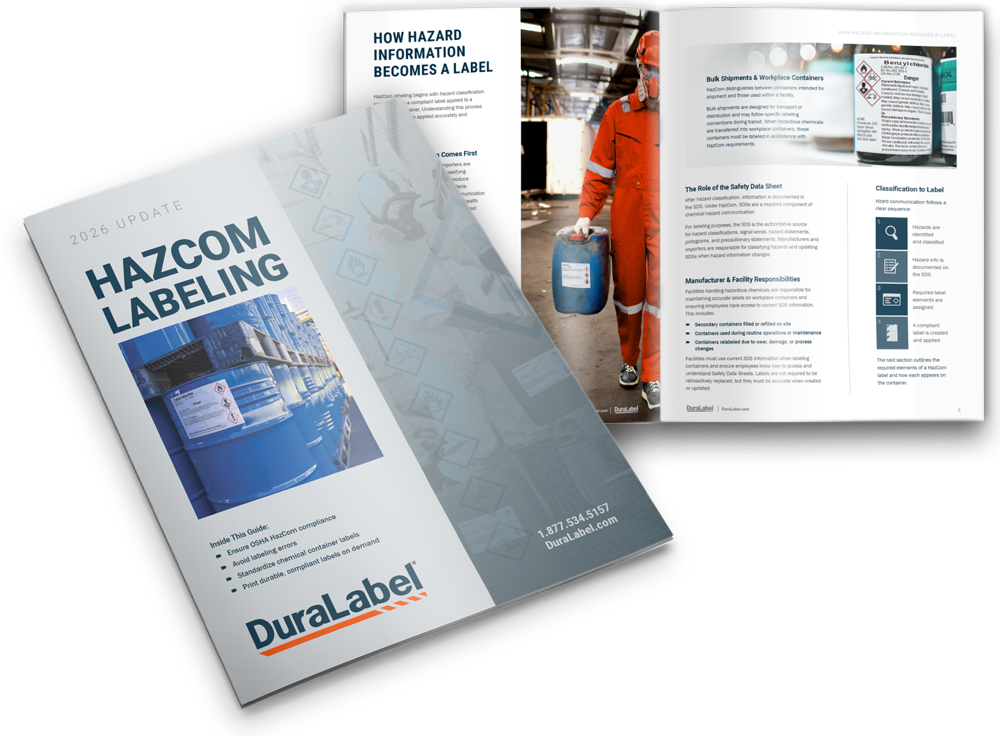
For facilities reviewing or improving their Hazard Communication (HazCom) program, download the free DuraLabel® HazCom Labeling Guide for guidance on HazCom labels, Safety Data Sheets (SDSs), and regulatory requirements.
Chemical Hazards Often Hide in Plain Sight
Chemical hazards exist in nearly every industrial workplace, even when they are not immediately obvious. Maintenance shops use lubricants, degreasers, and solvents. Manufacturing operations rely on paints, adhesives, and cleaning products. Warehouses store fuels, compressed gases, and batteries, while laboratories and production areas may contain acids, caustics, and other hazardous chemicals.
Watch for the following warning signs:
- Containers with missing or unreadable labels
- Chemicals transferred into secondary containers
- Damaged or leaking containers
- Missing or outdated SDSs
- Employees unsure which personal protective equipment (PPE) is required
For example, a maintenance technician may use the same degreaser every day without an incident. If that product is transferred into an unlabeled spray bottle, employees may not recognize the chemical hazard or know which PPE is required. Clear labeling helps prevent these situations from leading to injuries.
Facilities should also evaluate new products before they are introduced into the workplace. Even a routine cleaning solution or maintenance chemical may require different storage conditions, handling procedures, or engineering controls than employees expect.
How Workers Are Exposed to Chemical Hazards
Workers can be exposed to hazardous chemicals in several ways:
- Inhalation: Breathing vapors, fumes, gases, or dust.
- Skin contact: Direct contact that may cause irritation, sensitization, or chemical burns.
- Eye contact: Splashes that can damage the eyes.
- Accidental ingestion: Ingesting chemicals from contaminated hands, food, or drinks.
- Injection: Chemicals being forced through the skin by high-pressure equipment.
|
Common Chemical Hazard |
Example |
Primary Risk |
Recommended Controls |
|
Flammable liquids |
Solvents, fuels |
Fire or explosion |
Proper storage, ventilation, clear labeling |
|
Corrosive chemicals |
Acids, caustics |
Skin and eye burns |
PPE, secure storage, durable labels |
|
Toxic substances |
Industrial cleaners |
Poisoning or illness |
Engineering controls, SDSs, employee training |
|
Compressed gases |
Oxygen, acetylene |
Pressure hazards |
Secure cylinders and routine inspections |
Understanding these routes of exposure helps facilities select appropriate engineering controls, establish safe work practices, and provide the right PPE for each task. Recognizing how chemicals enter the body allows employers to better protect workers and reduce unnecessary risks.
Recognizing Hazards Before an Incident Occurs
Effective hazard communication starts with clear, consistent information. OSHA's Hazard Communication Standard requires chemical containers to be labeled and accompanied by Safety Data Sheets (SDSs), while the Globally Harmonized System (GHS) standardizes hazard pictograms, signal words, and hazard statements. Together, these tools help employees quickly recognize health and physical hazards before handling a chemical.
Training is equally important. Employees should know how to read labels, locate SDSs, recognize warning symbols, and respond to chemical exposure. Regular training and accurate labels reinforce safe work practices.
Facilities should also inspect labels regularly. Labels that become faded, damaged, or unreadable can slow emergency response and increase the likelihood of mistakes during routine work.
Reducing Chemical Hazards in the Workplace
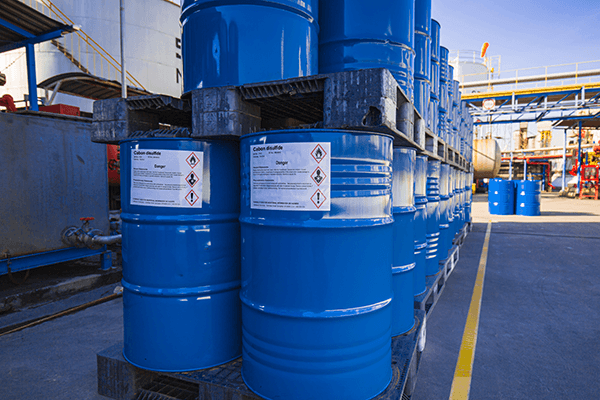
Clearly labeled chemical drums help workers quickly identify hazards and reduce the risk of chemical exposure.
Managing chemical hazards requires multiple layers of protection. Engineering controls such as local exhaust ventilation help reduce airborne exposure, while administrative controls and PPE help employees work safely when hazards cannot be eliminated.
Facilities can take the following steps to reduce chemical hazards:
- Reviewing chemical inventories regularly
- Replacing unreadable or damaged labels
- Keeping Safety Data Sheets (SDSs) accessible
- Training employees on hazard communication procedures
- Verifying that containers remain properly identified
These practices help employees quickly recognize hazardous substances, follow safe handling procedures, and maintain compliance with OSHA's Hazard Communication Standard. Small improvements to labeling and hazard communication can significantly reduce the risk of workplace incidents over time.
DuraLabel Products and Resources
Chemical hazards change as new products, materials, and processes are introduced. The DuraLabel Toro Max HazCom Kit helps facilities create durable, OSHA- and GHS-compliant chemical labels on demand using pre-installed HazCom templates, industrial label supplies, and a rugged sign and label printer. Instead of waiting for replacement labels, teams can print accurate labels as needed to keep hazard identification current.
Get the free HazCom Labeling Quick Start Guide to better understand HazCom labels, SDSs, regulatory requirements, and chemical labeling best practices.
If your facility has questions about chemical hazards, HazCom labeling, or selecting the right labeling solution, contact a DuraLabel labeling expert at 888-789-7964.
Read Next:
GHS Labeling for Medical Facilities
Best HVAC Labeling Materials for Refrigeration and Mechanical Systems


OSHA Rules for Chemical Hazards
What Are OSHA Rules for Hazardous Chemicals? OSHA rules for hazardous chemicals focus on identifying chemical ...
Read
Chemical Hazards in the Workplace Overview
What Are Hazardous Chemicals? Hazardous chemicals, often identified by DOT hazardous material labels during ...
Read
Hazardous Chemical Storage Risks and GHS Labeling Solutions
How Do Labels Support Safe Chemical Storage? Labels support safe storage of hazardous materials by clearly ...
ReadTake Action
Print Your Own Signs
Free Label Design Software