.png)
TIA-942 establishes requirements for reliable data center design, telecommunications infrastructure, power systems, and physical security.
Data centers support critical services, from cloud applications and financial systems to healthcare networks and industrial operations. When downtime occurs, organizations can lose revenue, productivity, and customer trust. TIA-942 gives teams a standardized framework for planning reliable data center infrastructure that supports uptime, resilience, and future growth.
What Is TIA-942?
TIA-942 is the Telecommunications Infrastructure Standard for Data Centers, developed by the Telecommunications Industry Association (TIA). The ANSI/TIA-942 standard establishes minimum requirements for data center infrastructure, including telecommunications, power, cooling, physical security, fire safety, and other facility systems.
Organizations use TIA-942 to build dependable, scalable data centers that support uptime and long-term growth. Instead of treating each system separately, the standard provides a structured approach to planning the physical infrastructure that keeps data centers operating.
What Does the TIA-942 Standard Cover?
The ANSI/TIA-942 standard addresses several key components of modern data center infrastructure.
Data Center Design: The standard provides guidance for facility layout, equipment placement, and infrastructure planning to support efficient operations and future growth.
Telecommunications Infrastructure: TIA-942 outlines requirements for structured cabling, network pathways, and telecommunications spaces that help maintain reliable connectivity throughout the facility.
Power Systems: Reliable power is essential for data center operations. The standard includes recommendations for electrical distribution, uninterruptible power supply (UPS) systems, and backup power sources.
Cooling Infrastructure: Servers and networking equipment generate significant heat. TIA-942 addresses cooling systems and environmental controls that help maintain safe operating temperatures.
Physical Security: The standard includes physical security considerations such as access controls, monitoring systems, and restricted areas designed to protect critical infrastructure.
Together, these requirements support reliable, high-performing facilities.
Understanding TIA-942 Ratings
One of the most recognized elements of TIA-942 is its rating system. These ratings help classify a data center's level of redundancy, availability, and resilience. As organizations move from Rated-1 to Rated-4, they gain greater protection against downtime and infrastructure failures.
|
Rating |
Description |
Key Benefit |
|
Rated-1 |
Basic infrastructure with a single path for power and cooling. |
Lower cost and simple design. |
|
Rated-2 |
Includes redundant capacity components. |
Improved reliability during equipment failures. |
|
Rated-3 |
Supports concurrent maintainability, allowing maintenance without disrupting operations. |
Reduced downtime during planned maintenance. |
|
Rated-4 |
Provides fault tolerance and multiple independent infrastructure paths. |
Highest level of availability and resilience. |
Higher ratings provide greater redundancy, availability, and resilience.
Why TIA-942 Matters for Modern Data Centers
Every data center depends on reliable infrastructure. A power failure, cooling issue, or telecommunications outage can disrupt operations and create costly downtime.
TIA-942 helps organizations reduce those risks through standardized infrastructure planning that supports reliability, uptime, and overall operational performance. The framework supports:
- Improved uptime and reliability
- Greater infrastructure resilience
- Better scalability for future growth
- Consistent design standards across facilities
For example, a data center designed for concurrent maintainability allows teams to service equipment without interrupting critical operations, reducing downtime during routine maintenance.
As data center needs change, TIA-942 continues to evolve. The current ANSI/TIA-942-C revision reflects modern data center needs, including edge deployments, higher-density infrastructure, and updated connectivity requirements.
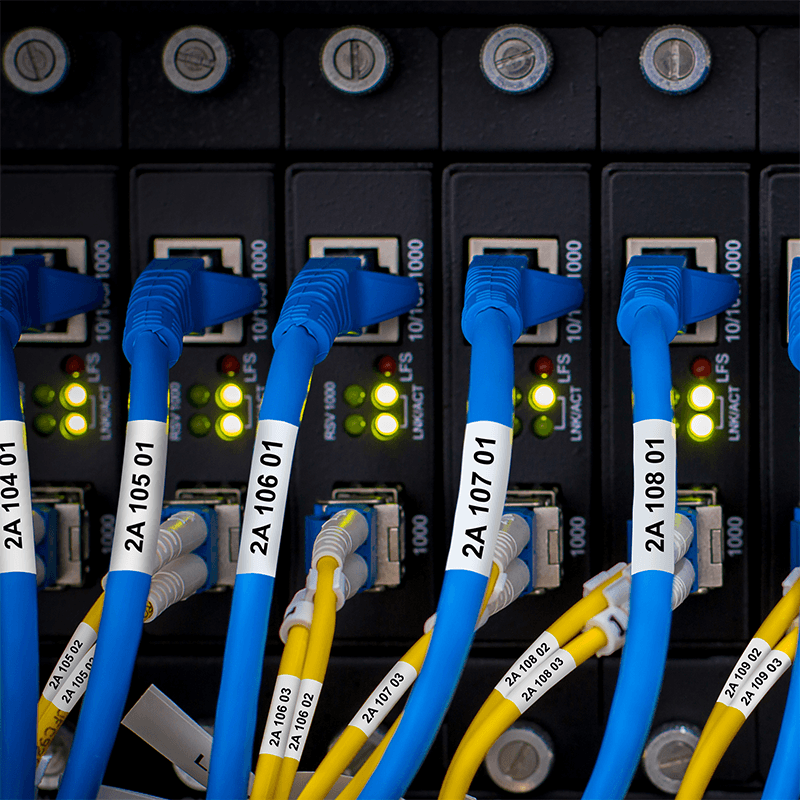
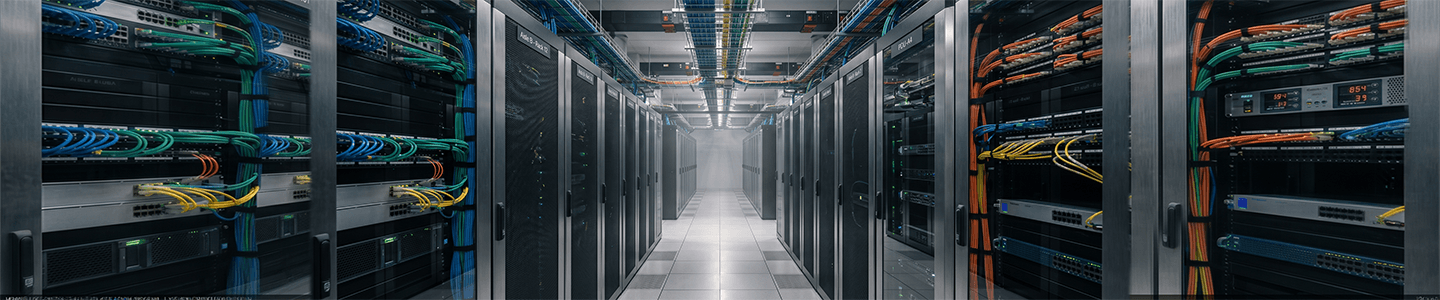
Clear cable identification helps technicians locate assets faster and reduce errors during maintenance and troubleshooting.
Why Data Center Labeling Supports TIA-942 Goals
Reliable data center infrastructure depends on more than redundant systems. Teams must also be able to quickly identify critical assets.
TIA-942 emphasizes organized telecommunications infrastructure, structured cabling, and efficient maintenance practices. Clear identification makes equipment easier to locate, troubleshoot, and maintain.
For example, a technician responding to a network issue may need to identify a specific cable, patch panel, or rack within minutes. Missing or inconsistent labeling can slow response times and increase the risk of disconnecting the wrong equipment. In environments where uptime is critical, small mistakes can create larger operational problems.
Common identification practices in data centers include:
- Cable and fiber labeling
- Rack and cabinet identification
- Patch panel labeling
- Power circuit identification
- Asset tracking labels
When labeling systems remain accurate and consistent, maintenance becomes more efficient, infrastructure changes are easier to document, and teams can work with greater confidence. While TIA-942 is not a labeling standard, clear infrastructure identification supports many of the reliability, organization, and operational goals the standard promotes.
Data Center Labeling Tools from DuraLabel
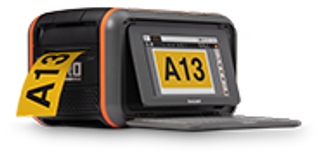
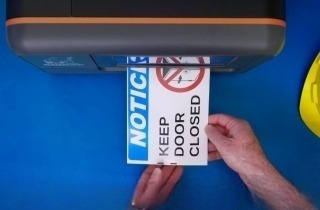
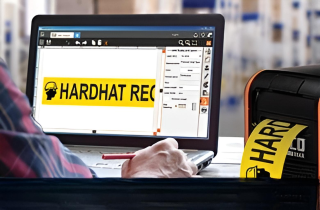
DuraLabel® Toro® Max Industrial Sign and Label System helps teams create durable labels for racks, cabinets, cables, patch panels, power circuits, equipment, and other critical assets.
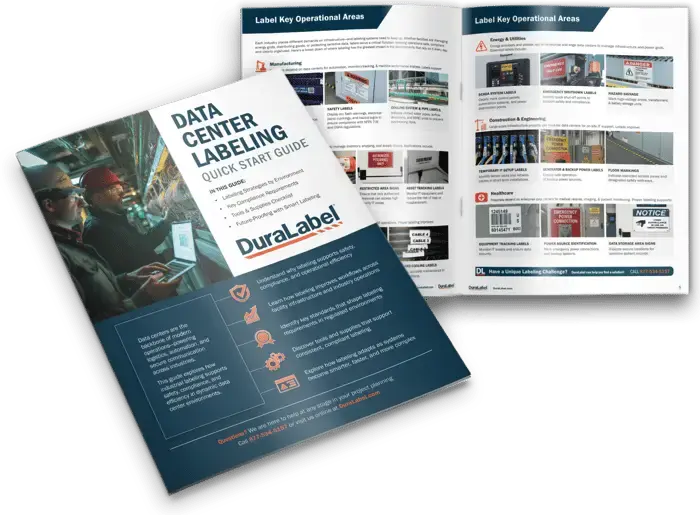
For additional guidance, download DuraLabel’s free Industrial Data Center Labeling Guide. It offers best practices for creating consistent, durable labels that support safety, maintenance, and efficiency across complex data center environments.
Have questions about labeling solutions for your data center? Call a DuraLabel expert at 1-888-786-9223 for personalized assistance.
Read Next:
Why Upgrade to the DuraLabel Toro Max Industrial Sign and Label System
Modern ERP System Adoption and the Shift Away from Legacy Platforms

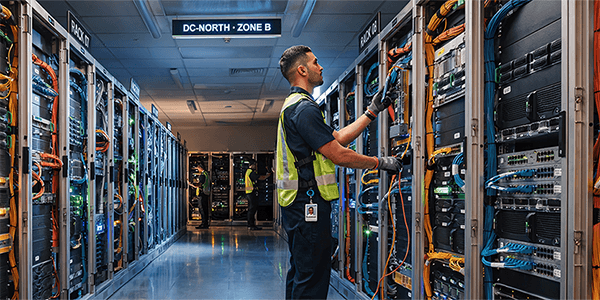
Data Center Labels for Better Organization, Safety, and Uptime
How Do Data Center Labels Improve Uptime and Organization? Data center labels help technicians quickly ...
Read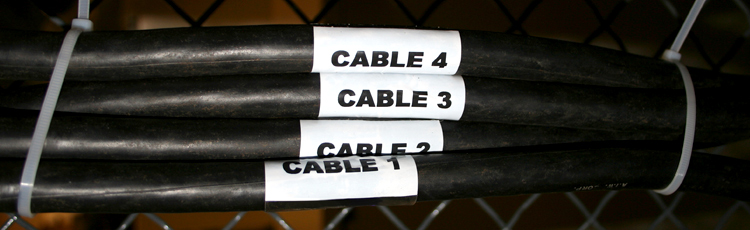
Cables Markers Tags
What Are the Best Labeling Options for Wires and Cables? The best labeling option depends on whether the item ...
Read
Wire Color Coding
Proper wire color coding is a critical safety requirement for protecting workers from electrical hazards. ...
ReadTake Action
Print Your Own Signs
Free Label Design Software