.png)

Secondary container labels communicate chemical hazards and help facilities maintain consistent workplace labeling.
What Are Secondary Container Labels?
Secondary container labels identify hazardous chemicals that have been transferred from their original containers into workplace containers such as spray bottles, jugs, buckets, or smaller bottles. These labels help employees identify the chemical and understand its hazards.
Secondary containers are common in maintenance, manufacturing, cleaning, and other workplace operations where employees transfer chemicals into smaller containers for use throughout a facility.
What Are the OSHA Requirements for Secondary Container Labels?
The Occupational Safety and Health Administration (OSHA) requires employers to label most workplace containers holding hazardous chemicals. Employers can use the label elements required for shipped containers or a workplace labeling system that communicates the product’s identifier and hazard information. Portable containers are exempt when the employee who transfers the chemical uses it immediately.
When Does a Secondary Container Need a Label?
Whether a secondary container requires a label depends on how and when the chemical will be used. A maintenance employee might pour a solvent from its original container into a smaller bottle for immediate use during a task. That portable container may qualify for OSHA's immediate-use exception if it remains under the employee’s control and is used only by that employee during the same work shift. However, if the bottle is left for another employee or stored for later use, it needs appropriate workplace labeling.
What Information Goes on Secondary Container Labels?
OSHA gives employers flexibility when meeting workplace labeling requirements. Facilities can use the same standardized hazard information found on shipped chemical containers, excluding the responsible party information, or establish an alternative workplace labeling system.
|
Labeling Option |
What the Label Needs |
|
Full GHS-style workplace label |
Product identifier, signal word, hazard statement(s), pictogram(s), and precautionary statement(s) |
|
Alternative workplace label |
Product identifier plus words, pictures, symbols, or a combination that provides general hazard information. Specific hazard information must also be immediately available through the facility’s HazCom program. |
|
Immediate-use portable container |
No label required when the chemical is transferred from a labeled container and used immediately by the employee who made the transfer. |
These OSHA requirements give facilities options for creating a system that fits their operations. Secondary container labels do not always need to duplicate every element found on the original manufacturer label. However, the system must provide employees with the information needed to understand the chemical’s physical and health hazards.
How Safety Data Sheets Support Secondary Container Labeling
Safety Data Sheets (SDSs) play an important role in a facility’s hazard communication program. The product identifier on a chemical label helps connect that chemical to its corresponding SDS, where employees can find more detailed information about hazards, handling, storage, exposure controls, and emergency measures.
Consistent naming can make that connection easier. If a facility identifies a degreaser by its full product name on the SDS, using the same identifier on secondary container labels helps employees locate the correct safety information without guessing which chemical is inside.
Common Secondary Container Labeling Mistakes
Secondary containers can create gaps in hazard communication when facilities lack a consistent labeling process. Common problems include:
- Leaving spray bottles or other containers completely unlabeled
- Using unclear abbreviations instead of recognizable product identifiers
- Allowing handwritten or printed labels to become damaged or illegible
- Reusing a labeled container for a different chemical without updating the label
- Assuming employees already know what a container holds
OSHA requires workplace labels and other warnings to be legible and in English and to appear prominently on the container or remain readily available in the work area. Employers can include additional languages if the information is also presented in English.
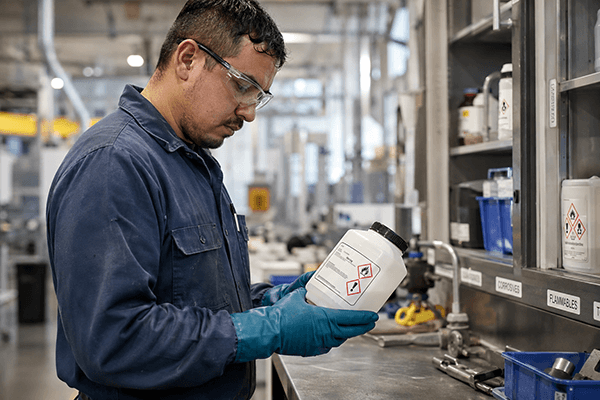
Regular label inspections help facilities identify damaged, missing, or outdated chemical hazard information.
A standardized system can make labeling easier to manage across departments. It helps employees follow consistent hazard communication practices and gives EHS teams a more reliable process for reviewing labels during inspections and HazCom program updates.
Creating a Consistent Secondary Container Labeling System
Facilities should establish clear rules for when employees need to create a secondary container label, what information to include, and who is responsible for replacing damaged or outdated labels.
Label materials also matter. Chemicals, moisture, abrasion, and frequent handling can cause poorly matched labels to fade, peel, or become difficult to read. Facilities should select label supplies suited to the conditions where containers are stored and used.
DuraLabel® Products and Resources for Secondary Container Labels
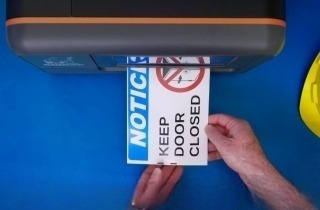
The DuraLabel Toro® Max Industrial Sign and Label System gives facilities an in-house option for creating durable GHS secondary container labels. Teams can standardize label formats and create clear, easy-to-read labels for hazardous chemicals without relying on handwritten labels.
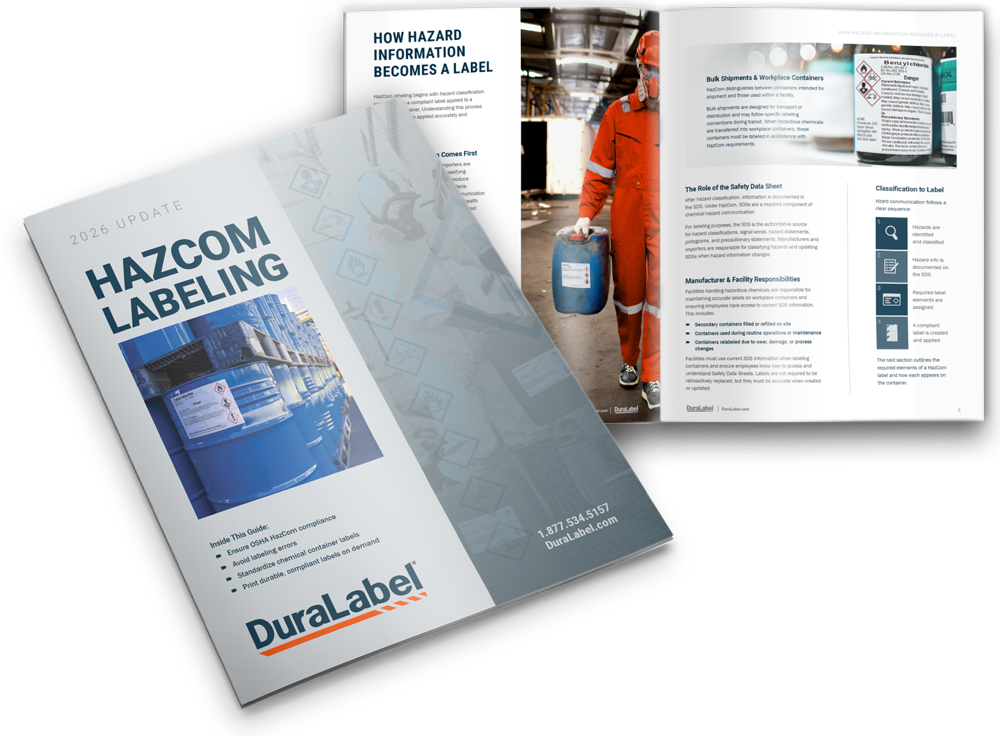
Download DuraLabel’s free HazCom Labeling Quick Start Guide. It provides additional guidance for facilities reviewing chemical labeling requirements and their hazard communication programs. The guide covers key HazCom labeling information that teams can reference when developing or updating workplace practices.
Facilities with specific questions about secondary container labels or creating an in-house labeling system can contact a DuraLabel expert at 888-789-7964.
Read Next:

Take Action
Print Your Own Signs
Free Label Design Software