.png)
How Are Industrial Labeling Trends Shaping Safety and Compliance?
Industrial labeling trends are shifting toward clearer communication and stronger compliance practices. Facilities rely on consistent visual systems to support OSHA labeling requirements, guide daily operations, and protect workers in fast-paced, high-risk settings.
To understand where facility labeling is headed, several themes stand out across construction, manufacturing, energy, warehousing, and healthcare. These trends show how to strengthen facility visual systems, improve hazard identification, and maintain long-term compliance.
Key industrial labeling trends include:
- Rising durability expectations across harsh environments
- Greater emphasis on standardized label formats and templates
- Rapid expansion of visual management practices across industries
- Increased demand for customized, hazard-specific labeling
- Growing adoption of cross-department labeling strategies
These trends highlight a shift toward clearer communication, stronger compliance alignment, and labeling systems that adapt to changing operational needs. Facilities that understand and apply these developments can build safer workflows and stay ahead of regulatory requirements.
Compliance-Driven Industrial Labeling Trends That Influence Facility Strategies
Compliance remains the central force behind industrial labeling trends. OSHA, ANSI, GHS, and NFPA requirements guide labeling strategies across dynamic environments such as construction, utilities, chemical processing, and warehousing.
Durable labeling strengthens regulatory visibility and day-to-day safety. In environments where chemicals, abrasion, heat, or UV exposure can degrade labels, high-performance materials help maintain clarity and compliance.
Three compliance themes stand out in modern facilities:
- More consistent adoption of ANSI Z535 formatting for standardized color coding, layouts, and signal words
- Greater focus on chemical resistance and high-temperature materials to meet OSHA and GHS expectations during audits
- Increasing use of preformatted templates, especially for electrical panels, arc flash warnings, and pipe markers
As facilities adopt standardized labeling systems, safety teams increasingly rely on durable supplies and dependable design tools to streamline updates and maintain compliance.
Trend 1: Durability Expectations and Workplace Safety Labeling

Weather challenges, chemical exposure, and mechanical abrasion all influence how facilities select label stock. More operations now recognize that durability directly affects compliance performance, especially in harsh environments.
As seen in DuraLabel®’s tough-tested approach, labels must withstand real-world stressors—heat, chemicals, UV exposure, and abrasion—to remain readable. These performance expectations increasingly shape purchasing decisions and labeling practices across the industrial sector.
Key durability-driven behaviors continue to emerge:
- Growth in high-temperature materials for foundries, engine rooms, and power generation
- Increased adoption of chemical-resistant and abrasion-resistant labels for food processing, manufacturing, and labs
- Greater demand for outdoor-ready materials to withstand multi-year UV exposure on construction and utility sites
For example, maintenance teams at energy facilities once relied on generic vinyl labels for electrical boxes exposed to direct sunlight. Those labels often faded within a year, leading to compliance risk under OSHA 1910.145.
Teams now replace them with UV-resistant premium vinyl or reflective stock to maintain clarity for longer periods.
As environmental demands intensify, workplace safety labeling continues to play a key role in helping teams recognize hazards quickly and maintain safe operations.
Trend 2: Standardized Label Design Becomes an Operational Priority for Facility Visual Systems
As operations expand, standardized labeling has become a facility-wide priority. Uniform formats keep hazards, procedures, and equipment identifiers consistent across departments and shifts.
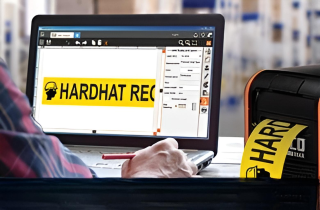
This trend is reinforced by the rise of template-driven industrial labeling software, which provides preformatted options for electrical panel labels, arc flash signage, GHS labels, and other OSHA-aligned applications.
Facilities report strong operational benefits:
- Faster updates during equipment upgrades or safety audits
- Reduced interpretation errors across teams
- Better documentation during compliance reviews
- More consistent communication across multiple work areas
In utilities and energy environments, technicians depend on standardized arc flash labels with clear layouts and PPE details. When formats vary between assets, workers lose time verifying information. NFPA 70E-aligned templates reduce inconsistencies and support safer decision-making.
Trend 3: Visual Management Expands Across Facility Visual Systems
Visual management continues to expand across construction, utilities, and healthcare as organizations respond to evolving hazards and compliance demands. Market analysis shows rising safety signage demand in these sectors, driven by regulatory pressure and the need for clearer hazard communication.
Industry publications also highlight how construction sites increasingly depend on clear, durable signage to manage fast-changing risks, reinforcing their growing reliance on strong visual systems.
Additionally, healthcare and utility environments face mounting regulatory expectations under OSHA’s Hazard Communication Standard, which requires clear labeling for chemical, biological, and physical hazards—driving broader adoption of consistent visual communication practices.
The expansion of visual systems reflects the need for clearer, faster hazard recognition, and labeling systems suited to high-risk, fast-paced environments.
Labeling practices now support broader facility goals:
- Improving storage and inventory layouts through clearer identification
- Guiding foot and vehicle traffic with floor marking and directional signage
- Supporting safety programs such as lockout/tagout and chemical handling
- Meeting the needs of multilingual workforces through bilingual or pictogram-based communication
These industry examples illustrate how visual clarity strengthens operational flow—from construction jobsite signage to healthcare biohazard warnings.
Each environment relies on precise messaging, high contrast, and durable materials to keep teams oriented.
Trend 4: Customization Moves from Optional to Standard Practice
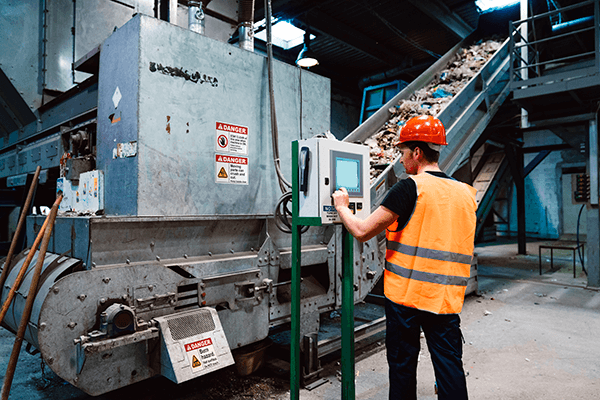
Custom workplace labeling has become a baseline expectation across industries. Facilities can no longer rely on generic stock signs to capture unique hazards or site-specific processes.
This shift reflects a broader focus on hazard-specific communication, where custom signs reduce downtime and strengthen compliance during inspections.
Customization trends emerging across facilities include:
- Site-specific hazard descriptions tailored to local processes
- Equipment-specific instructions based on manufacturer recommendations
- Color-coded systems supporting 5S and lean workflows
- Custom arc flash data fields taken from facility-specific analysis
For example, a chemical processing area often requires more detailed warnings than a generic “Caution: Corrosive” sign provides. Adding mixing instructions, PPE requirements, or temperature limits gives workers clearer expectations and reduces risk.
Trend 5: Multi-Department Labeling Strategies Gain Momentum
Labeling was once managed primarily by safety teams, but facilities increasingly adopt cross-department systems. Unified labeling across operations, maintenance, logistics, and training improves communication in shared environments.
Facilities using a unified labeling approach often gain:
- Better visibility during audits
- Stronger hazard awareness across shared work areas
- Clearer communication during shift changes
- Faster updates when equipment or layouts change
For example, inventory teams rely on barcode and rack labels to support material flow, while maintenance teams depend on durable equipment labels that withstand heat, moisture, or chemicals. When labeling systems align across departments, visual communication becomes clearer, safer, and easier to maintain.
Looking Ahead: How Facilities Can Continue Strengthening Compliance
Industrial labeling trends point to a continued shift toward standardization, durability, and long-term compliance. Facilities that strengthen their labeling strategies early gain advantages across audits, maintenance workflows, and operational efficiency.
By adopting durable materials, standardized templates, and clear visual systems, teams reduce risk and maintain continuity across changing environments. These trends reflect a broader industry commitment to clearer communication and safer, more reliable workplaces.
DuraLabel Products to Get Ahead of Industrial Labeling Trends
Modern labeling trends point to a consistent need for reliable tools that support compliance while adapting to new workflows, hazards, and regulatory expectations. Purpose-built equipment enables teams to produce clear, durable labels that strengthen safety and organization.
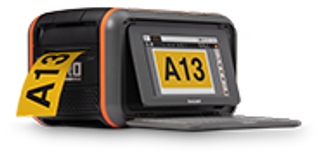
The DuraLabel Toro® Max Industrial Sign and Label System supports facilities adapting to evolving labeling needs. Its portable, all-in-one design prints durable labels suited for heat, chemicals, and outdoor conditions. The DuraLabel Toro Max Printer is a strong fit for teams standardizing templates, updating workflows, or expanding visual management.
To build a stronger labeling strategy, download the free Facility Signage Handbook, which outlines practical steps for improving workplace safety, understanding OSHA labeling requirements, and creating a consistent visual communication system.
If your facility has specific labeling challenges or needs help selecting the right materials, call 1-888-789-7964 to speak with a DuraLabel expert.
Read Next:
What is HazCom? Your Guide to Chemical Labeling, GHS & OSHA Standards
6 Industrial Labeling Mistakes to Fix Before Year-End Audits

Why a GHS Labeling System Matters for Hazard Communication
What Is GHS Labeling? GHS labeling is a standardized method for communicating chemical hazards in the ...
Read
What is HazCom? Your Guide to Chemical Labeling, GHS, & OSHA Standards
What Is HazCom? OSHA’s Hazard Communication Standard (HazCom) is a regulatory framework requiring chemical ...
Read
Workplace Chemical Labels and GHS Requirements Explained
What is Chemical Labeling? Clear chemical labels help workers recognize hazards quickly, select the right ...
ReadTake Action
Print Your Own Signs
Free Label Design Software